Laboratory products
Frequently the first factor that furnace customers have in mind is the temperature at which they wish to work. This is undoubtedly of major importance but some consideration should also be given to which type of furnace configuration would be most practical and economical for their application.
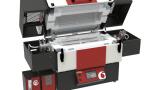
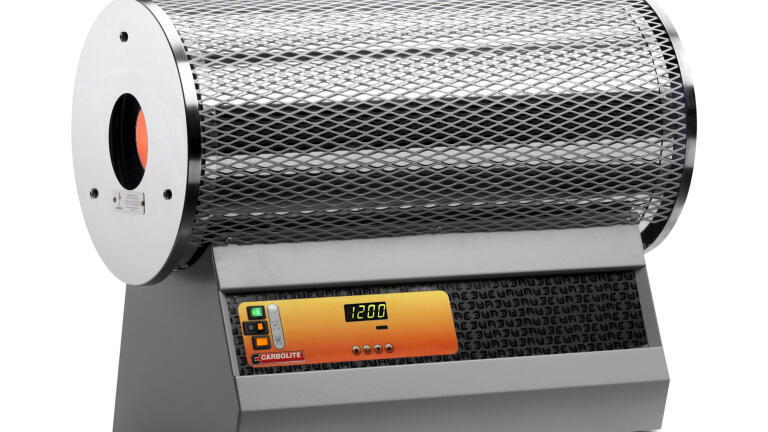
The logic of choosing a tube furnace versus a chamber furnace is may not initially be obvious. Up to around 1300°C most furnaces are heated using radiant heating elements formed from coils of FeCrAl wire. So the simplest and therefore most economical design of furnace is to wrap this wire around a tube and use that tube as the heated receptacle.
Of course the downside of such a basic design is that any damage to this tube during use is in effect damaging the heating element, so frequently a secondary ‘work tube’ that is thermally and chemically compatible with the applications is added.
As well as removing the need for complicated door mechanisms ceramic, quartz glass or metal (IAP) tubes unlike the porous insulation of chamber furnaces are Impervious to gas. Combined with their comparatively small volume, this makes them ideal when there is a need to process sample under an atmosphere of some sort. Protective, reducing or even vacuum all being possible.


.jpg)
-(2).jpg)