
Laboratory products
Why Does Gluten Intolerance Happen So Quickly?
Sep 14 2019
According to the latest statistics from Mintel, around 7% of British adults actively avoid gluten because of an "intolerance" or "allergy" caused by the group of proteins. For patients diagnosed with the autoimmune disorder known as celiac disease, the symptoms can be severe.
So, what causes the negative reaction after eating gluten-rich products such as bread, luncheon meats, seasoned snack foods and soup mixes?
Linking celiac to CD4+ T cells and cytokines
New research published in the journal Science Advances explains how people with celiac disease possess CD4+ T cells that rapidly deposit immune chemicals called cytokines into the bloodstream when exposed to gluten proteins such as wheat, rye and barley. This reaction damages the small intestine and can trigger symptoms like abdominal pain and nausea within an hour of consuming gluten.
Until now, the only remedy for celiac disease has been strict adherence to a gluten-free diet. Though thanks to the new study pioneered by Massachusetts based vaccine development company ImmusanT Inc, new therapies for the autoimmune disease could soon become an option.
New autoimmune disease vaccine in the works
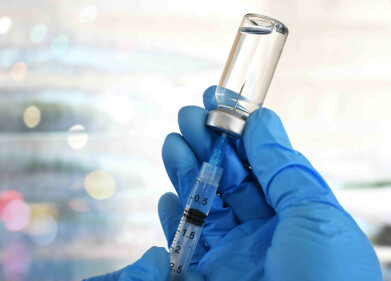
To develop the vaccine, the team injected gluten peptides under the skin of patients diagnosed with celiac disease. Others were given a drink laced with wheat flour. Around two hours after exposure to gluten, the team recorded an increase in levels of interleukin-2 (IL-2), a cytokine released by CD4+ T cells. They also noted a spike in other immune chemicals produced by CD4+ T cells.
“When patients ate gluten, symptoms and cytokines went up at the same time,” says Robert Anderson, chief scientist of ImmusanT Inc.
As cytokine levels increased, nausea and vomiting became more intense. By confirming the link between celiac symptoms and certain cytokines, Anderson and his team hope to develop new therapies that actively block CD4+ T cells that react to gluten. The research could also help doctors diagnose celiac disease by measuring levels of IL-2 in the blood, instead of exposing patients to tests that involve exposure to gluten.
From developing vaccines to trialing medications, laboratory equipment is critical to new healthcare research. With an industry turnover of almost £7 billion, GAMBICA, the Trade Association for Instrumentation, Control, Automation and Laboratory Technology in the UK, plays an important role in helping its members harness new opportunities and develop an international presence. For a closer look at the strategies being used, don't miss 'Finding an easy, cost-effective way to break into new markets.


Digital Edition
Lab Asia Dec 2025
December 2025
Chromatography Articles- Cutting-edge sample preparation tools help laboratories to stay ahead of the curveMass Spectrometry & Spectroscopy Articles- Unlocking the complexity of metabolomics: Pushi...
View all digital editions









Events
Jan 21 2026 Tokyo, Japan
Jan 28 2026 Tokyo, Japan
Jan 29 2026 New Delhi, India
Feb 07 2026 Boston, MA, USA
Asia Pharma Expo/Asia Lab Expo
Feb 12 2026 Dhaka, Bangladesh




