Laboratory products
Why Do Wombats Poo Cubes? - Finally We Know
Dec 19 2018
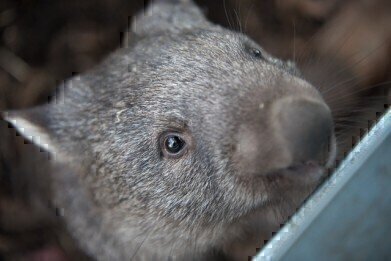
From kangaroos and koalas to redback spiders and eastern brown snakes, Australia has no shortage of quirky animals. While the humble wombat may be small, the unusual square shape of its stools has captured the attention of scientists across the globe.
Intrigued by the mystery of the square pellets, mechanical engineer David Hu of Atlanta's Georgia Institute of Technology was thrilled when an Australian colleague sent him intestines samples from two roadkill wombats.
"We opened those intestines up like it was Christmas,” he says.
An exception to the rule
Unlike spheres, Hu explains that cubic shapes in nature are highly unusual as the formation of flat facets and angular corners require energy. As a result, most animals excrete waste in round pellets or coils. Wombats however, are an exception to the rule. In fact, the Australian marsupials are the only species in the world that excrete square-shaped scat.
The distinctive shape of wombat waste is caused by highly elastic intestines, which help to shape the waste into cubes instead of the circular pellets or spirals seen in other animals, including fellow marsupials like the kangaroo and koala.
Stretchy intestines
The findings were reported at the American Physical Society Division of Fluid Dynamics meeting in Atlanta, with Hu explaining that wombats use scat to mark their territory. Square-shaped scat is less likely to roll away than round pellets, which could justify the unique form.
When analysing the wombat intestines sent from Australia, Hu noted they were stretched to two or three times the normal width to accommodate a large amount of scat. He also noted that some regions were stretchier than other, which he proposes helps to form the clear-cut edges as the waste moves through the intestines.
Wombat waste is also extremely dry and fibrous by the time it reaches the end of the six-metre-long intestine, which helps to retain the signature square shape. Interestingly, the faeces only changes from a liquid to a solid in the final 8% of the intestine, where it's formed into cubes measuring around 2 centimetres in length.
From square-shaped wombat stools to the thermal distribution of barn owls during flight, the study of animals can be fascinating. For a closer look at the latest findings don't miss 'Investigating the Thermal Physiology of Birds and Mammals', which introduces the latest FLIR E300 thermal imaging camera being used in both the field and laboratories.


Digital Edition
Lab Asia Dec 2025
December 2025
Chromatography Articles- Cutting-edge sample preparation tools help laboratories to stay ahead of the curveMass Spectrometry & Spectroscopy Articles- Unlocking the complexity of metabolomics: Pushi...
View all digital editions










Events
Jan 21 2026 Tokyo, Japan
Jan 28 2026 Tokyo, Japan
Jan 29 2026 New Delhi, India
Feb 07 2026 Boston, MA, USA
Asia Pharma Expo/Asia Lab Expo
Feb 12 2026 Dhaka, Bangladesh




