Laboratory products
Which Cows Make the Best Milk?
Jul 16 2019
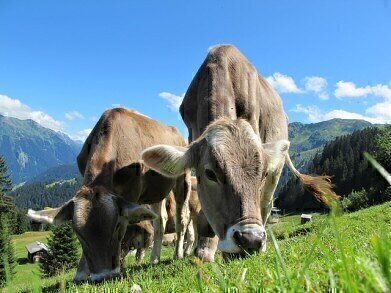
While quality grass and good genetics play an important role in producing Grade A milk, new research suggests that the unique gut microbes found in dairy cows are also a major factor. Led by Israeli biologist Itzik Mizrahi and British animal scientist John Wallace, the study reveals new insight into ways to improve the quality of cow's milk and minimise the enormous methane emissions associated with the dairy industry.
Cows, as well as other ruminant mammals such as sheep and goats, are equipped with unique stomachs filled with millions of microbes designed to digest hay, grass and other plant materials into calories and nutrients. While the process is efficient at generating energy, the by-product is microbe-generated methane. Every year ruminants emit around the world emit around 100 million tons of methane, which makes the dairy industry the second largest human-driven contributor of the greenhouse gas.
The link between milk quality and methane production
Working from Israel's Ben-Gurion University of the Negev in Beersheba, Mizrahi and Wallace sought to investigate the role rumen gut microbes play in both milk quality as well as methane production. To do this they mapped the DNA of more than 1000 Holsteins and Norwegian Red dairy cows, including herds from the United Kingdom, Sweden, Italy and Finland. Using the DNA data, the team then identified the unique microbes found in the guts of each cow and drew comparisons using advanced machine learning computer programs.
The findings were reported in the journal Science Advances and explain how more than 500 cows shared microbial 39 "core microbe" species. When determining the quality of milk, the researchers assert that these core microbes play a more important role than genetics. They also suggest that core microbes also influence how much methane a cow emits.
A new era of eco-friendly agriculture
From an environmental perspective, the new findings could help scientists develop new ways to minimise methane emissions within the dairy industry. This could involve supplementing dairy cow feed with certain microbes designed to increase milk quality, minimise methane emissions and support sustainable, eco-friendly agricultural practices.
"Characterising, quantifying, and understanding the role of rumen microbiome are therefore of significant scientific, economic, and environmental interest," reads the introduction.
Sophisticated laboratory equipment like the advanced machine learning computer programs used to compare the DNA data of dairy cows plays an important role in supporting scientific research. For a closer look at the latest CAMSIZER M1 technology don't miss 'How to perform fully automated static image analysis simply and accurately'.


Digital Edition
Lab Asia Dec 2025
December 2025
Chromatography Articles- Cutting-edge sample preparation tools help laboratories to stay ahead of the curveMass Spectrometry & Spectroscopy Articles- Unlocking the complexity of metabolomics: Pushi...
View all digital editions










Events
Jan 21 2026 Tokyo, Japan
Jan 28 2026 Tokyo, Japan
Jan 29 2026 New Delhi, India
Feb 07 2026 Boston, MA, USA
Asia Pharma Expo/Asia Lab Expo
Feb 12 2026 Dhaka, Bangladesh




