Laboratory products
When Were Prosthetic Limbs Invented?
Sep 15 2016
Prosthetic limbs are one of the most enabling inventions of all time. They enhance people’s abilities. Whether limbs have been lost, removed, or people were born without them, a prosthetic limb can fulfil the function, if needed.
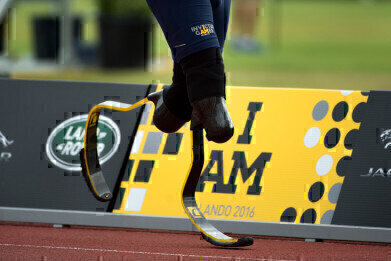
A shining example of what prosthetic limbs make possible is the Paralympics. Amongst over 4,000 athletes will be hundreds with prosthetic limbs, competing and excelling in a variety of sports. Rio 2016 is the fifteenth event to date, with the first in 1956. But do prosthetic limbs go further back than this impressive and diverse tradition?
Over 100 years
While sparse examples of prosthesis are scattered as far back as 1000 BC, the widespread production of prosthetic limbs became notable in the World War One (WWI) period. Thousands of returning soldiers had incurred serious injuries in combat. As well as the detrimental impact on these ex-soldiers’ quality of life, there was a potential negative impact for the economies of the countries. With so many disabled citizens, the countries’ workforce would be severely depleted.
The solution? Germany and France began mass production of prosthetic limbs. Admittedly they weren’t as advanced as those we see today. Post-WWI prosthetics didn’t imitate the human form. They were made for purpose – essentially acting as tools. Pioneering French engineer Jules Amar argued that prosthesis should not be a “slave to nature”.
Changing needs
The function-based production was replicated in Germany. Over time, however, the aesthetics of prosthetic limbs became more important. Wooden hand attachments became available in France, for social situations. Nowadays the aesthetic approach even uses plaster casting to replicate affected limbs, where possible.
But while the importance of appearance has grown more and more, we can also see a return to the functional approach, especially in the Paralympics. The running blades worn by sprinters are built to enhance their performance, rather than to appear similar to a human leg. One thing that has definitely changed is the quality of prosthetic limbs. Modern research and technology enables limbs to be made from the likes of carbon fibre and titanium, making them both strong and light.
Developing field
Something that’s become essential in prosthetics fabrication is sterilisation. Autoclaving is used in prosthetics fabrication to heat and pressurise equipment, making is sterile. It’s also used in other fields like microbiology, veterinary science and dentistry, but it has high costs and requires quite a large space. Are there other options? ‘Autoclaving Alternatives for Effective Sterilisation’ explores sterilisation methods and equipment that are more practical for smaller laboratories.
Image Credit: Wikimedia Commons

Digital Edition
Lab Asia Dec 2025
December 2025
Chromatography Articles- Cutting-edge sample preparation tools help laboratories to stay ahead of the curveMass Spectrometry & Spectroscopy Articles- Unlocking the complexity of metabolomics: Pushi...
View all digital editions









Events
Jan 21 2026 Tokyo, Japan
Jan 28 2026 Tokyo, Japan
Jan 29 2026 New Delhi, India
Feb 07 2026 Boston, MA, USA
Asia Pharma Expo/Asia Lab Expo
Feb 12 2026 Dhaka, Bangladesh




