Laboratory products
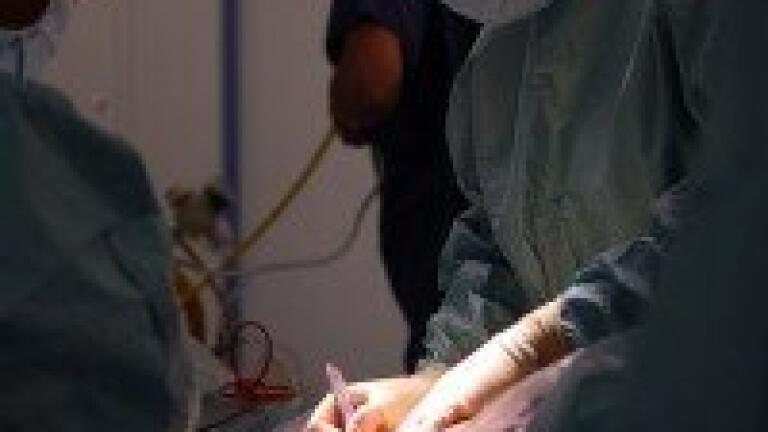
Surgeons may be trained like pilots in the future with a new laboratory design that acts as a virtual operating room, allowing medical trainees to practice procedures such as scalpel to skin on a computer screen, not on the torso of a living, breathing person.
Dr Teodor Grantcharov and Dr Vanessa Palter believe that surgical residents ought to achieve an established level of proficiency in a virtual operating room before they start plying their scalpel in a real operating room. Dr Grantcharov, an associate professor of medicine at the University of Toronto said: "There are studies that show that in the first 50 cases, the risk of major complications is significantly higher than after the next 30 cases. And all these studies are done on real patients."
According to the doctors, these are risks that don’t necessarily have to be taken, as a range of simulation tools enter the market which provide an alternate route for surgical residents to climb the early- and risk-filled- part of the learning curve.
"I always found it ridiculous to talk about learning curves on real patients," said Grantcharov.
"We want to see the learning curve in the simulation theatre or on the computer. Talking about learning curves of procedures on patients — I think it’s unethical."
The two surgeons recently published a paper showing that surgeons who train in a simulation lab first outperform colleagues who receive only standard surgical training. The study was based on University of Toronto surgical residents who all performed a laparoscopic right hemicolectomy, with the procedure being monitored and graded by outside experts.
Their findings have been published in this months journal Annals of Surgery, but the results were that convincing that the University of Toronto’s medical school made the virtual training program mandatory for surgery students even before the study was published.
This could suggest that these new virtual training methods could be common place in universities, making new laboratories a central part of the 'learning curve'.
Posted by Ben Evans


.jpg)
-(2).jpg)