Laboratory products
Scientists Develop Nanoparticle SARS-CoV-2 Model
Oct 26 2020
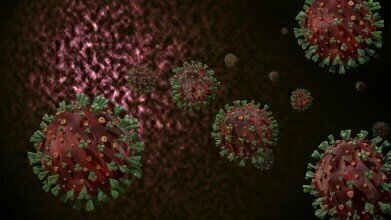
In a breakthrough for COVID-19 research, a team of researchers from the National Center for Advancing Translational Sciences (NCATS) and Naval Research Laboratory (NRL) has created a nanoparticle model that could accelerate the development of treatments for the novel virus. Working from laboratories in Washington DC, the team built a tool that mimics the cellular infection process of SARS-CoV-2. The new insight could help map how the virus operates and assist scientists in developing effective treatments for the disease.
Blocking the invasion process
To create the tool, the team used a fluorescent nanoparticle probe that binds to cells using the SARS-CoV-2 spike protein. This simulates the action that sees SARS-CoV-2 spike proteins bind to ACE2 receptors, infiltrate cells and infect the body. By modelling the process, the probe could be used to test the effectiveness of drugs and other treatments designed to block the cell infiltration process.
The findings were published in the journal ACS Nano, with co-corresponding author of the study Kirill Gorshkov explaining, “Our goal is to create a screening system to find compounds that block SARS-CoV-2 from binding to cells and infecting them.”
Mimicking the action of SARS-CoV-2
As the team were unable to use a genuine sample of SARS-CoV-2 without specialist facilities, Gorshkov instead turned to fluorescent nanoparticles to mimic the invasion process. “We at NRL are experts in nanoparticles, and the NCATS researchers are experts in drug screening using cellular systems," says Eunkeu Oh, co-corresponding author of the study and a research biophysicist at NRL. “So, it was the perfect match."
Tracking quantum dots
With the combined skillsets, the team were able to fast-track the creation of a fluorescent nanoparticle, which was built using selenium and cadmium. Known as a quantum dot, the probe measured just 10 nanometers in diameter and is 3000 times thinner than a human hair follicle. Once created the probe was studded with a section of the same spike protein found in the SARS-CoV-2 virus. The team were then able to simulate the early stages of viral infection and use the fluorescent glow to track how the prove interacted with human cells.
"Because they're such bright fluorescent objects, the quantum dots give us a powerful system to track viral attachment and effects on the cell in real time," says Gorshkov. “Using the quantum dots, we could create tests to use in drug screening and drug repurposing, using libraries of compounds that have activity but that also are approved by the U.S. Food and Drug Administration," adds Gorshkov. "Such assays could rapidly identify promising, safe treatments for COVID-19."
For more insight into the latest global laboratory news, don’t miss ‘Review of China market shows real potential for lab companies – despite current issues.’
Digital Edition
Lab Asia Dec 2025
December 2025
Chromatography Articles- Cutting-edge sample preparation tools help laboratories to stay ahead of the curveMass Spectrometry & Spectroscopy Articles- Unlocking the complexity of metabolomics: Pushi...
View all digital editions









Events
Jan 21 2026 Tokyo, Japan
Jan 28 2026 Tokyo, Japan
Jan 29 2026 New Delhi, India
Feb 07 2026 Boston, MA, USA
Asia Pharma Expo/Asia Lab Expo
Feb 12 2026 Dhaka, Bangladesh




