Laboratory products
How Unique is the Human Brain?
Nov 23 2017
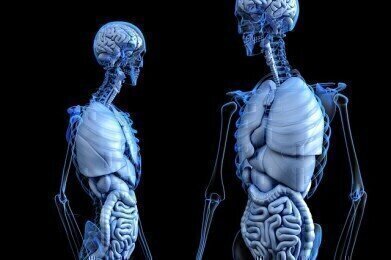
With a position at the top of the food chain, it's generally assumed that the human brain functions at a higher level than other animals. However according to new research, this assumption could be misplaced.
Published in the Journal of Human Evolution, a pair of scientists from North Carolina's Duke University are claiming that in comparison to 22 other species, the human brain is relatively unremarkable.
Calorie consumption ratios
Until now it's been thought that the human body channels a larger share of its daily calories to the brain than other animals. While the brain accounts for just 2% of a human's total body weight, it can consume over 25% of the body’s daily energy budget. Turns out, some animals also adopt a similar ratio.
While the human brain uses 50% more calories than chimpanzees and three to five times more than smaller animals like mice, squirrels and rabbits, some species are on par. According to the study, pen-tailed treeshrews have a similar "brain cost to calorie" ratio. Ring-tailed lemurs and pygmy marmosets also devote around 25% of energy intake to the brain.
"We don't have a uniquely expensive brain," explains Doug Boyer, co-author of the study and assistant professor of evolutionary anthropology at Duke University. "This challenges a major dogma in human evolution studies."
"Hungry" brains
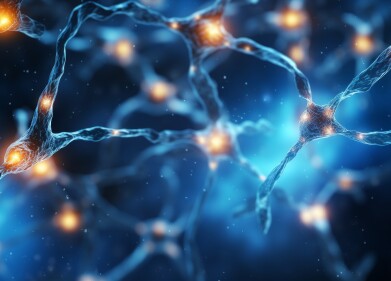
To measure the calorie cost of brains Boyer and his colleague Arianna Harrington reviewed published estimates of brain glucose uptake and internal skull volume in seven species. Both variables are common determinants of brain size.
As energy travels to the brain via blood vessels it delivers sugar, aka glucose. Therefore, by comparing brain glucose uptake and internal skull volume Boyer and Harrington could see how "hungry" each animal's brain was. The data was then used to predict brain energy expenditure levels in a further 15 species.
The keynote implication is that as a species, humans are not solely responsible for the evolution of "hungry" brains. Instead, the ratios seem to have appeared millions of years ago, when primates diverted from rodents and rabbits. So, while humans may be the smartest animals on the planet, they're not necessarily the most hardworking.
Of course, not all studies deliver the same outcomes. For more information on this common qualm don't miss 'Different Measuring Techniques Provide Different Results – But What is the Truth?' It spotlights the pros and cons of dynamic image analysis (DIA), static laser light scattering (SLS) and sieve analysis, the most common techniques used to determine particle size distribution.


Digital Edition
Lab Asia Dec 2025
December 2025
Chromatography Articles- Cutting-edge sample preparation tools help laboratories to stay ahead of the curveMass Spectrometry & Spectroscopy Articles- Unlocking the complexity of metabolomics: Pushi...
View all digital editions






Events
Jan 21 2026 Tokyo, Japan
Jan 28 2026 Tokyo, Japan
Jan 29 2026 New Delhi, India
Feb 07 2026 Boston, MA, USA
Asia Pharma Expo/Asia Lab Expo
Feb 12 2026 Dhaka, Bangladesh