Laboratory products
How Is Technology Used in Laboratories?
Jul 26 2019
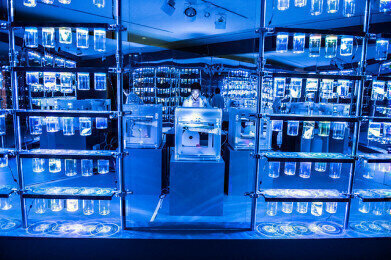
The last 30 years have seen an explosion in technological innovation in almost all parts of society and the scientific laboratory is no exception. Technology has not only been at the forefront of exciting new breakthroughs in the fields of medicine, pharmaceuticals and many other sectors, but it has also helped to streamline existing practices and optimise efficiency. Here’s a quick run down of five ways in which technology has revolutionised operations inside a typical laboratory all over the globe.
Automation
The advanced capabilities of computers and robots to complete menial, repetitive tasks that had traditionally been performed manually now frees up that human workforce to concentrate on more stimulating and rewarding areas of research. Instead of collecting and assimilating data, humans can now focus their energies and attention on analysing data to provide critical insight and drive lab processes forwards. Automation can also help optimise existing processes and make them more streamlined, achieving faster and more reliable results than pre-existing methods of laboratory operation could ever do.
Security
Whereas sensitive laboratory equipment has been traditionally guarded under lock and key, technological advances have now allowed for a more sophisticated system of instrument access management. There are both hardware and software mechanisms which can allow or deny designated individuals access to the equipment at hand, facilitating security and allowing administrators greater control than ever before. To learn more about how technology can aid security, check out Best Practices for Instrument Access Management, an informative e-learning session on the topic.
Smart capabilities
Just as smart-enabled appliances in the home can allow us to remotely control the temperature, so too can such adjustments be made in a laboratory setting. Of course, a degree or two of difference can be all the more impactive when it comes to dealing with sensitive chemical samples, so the ability to control temperature remotely via smart software is a huge boon for lab scientists. Furthermore, the interconnected nature of the Cloud allows researchers to upload their findings to the internet and share it with the scientific community quickly, easily and efficiently.
Space efficiency
Technological advances allow for greater efficiency not just in terms of process automation and analytical procedures, but also in physical space. Innovative techniques of studying samples mean that the same amount of information can now be gleaned from a specimen that is a fraction of the size of those used previously, while a single chip is now capable of performing the same function that several bulky pieces of equipment might have undertaken in the past. All of this adds up to greater space efficiency and more shelf space in the lab.
Sustainability
With rising concerns over the human impact on the natural world, sustainability is now a chief priority for businesses and individuals all over the world. On average, a laboratory consumes up to five times the amount of energy that a typical office does, making for a fairly unattractive environmental profile. Luckily, advances in resource consumption, power generation, process efficiency and recycling techniques allow laboratories all over the globe to achieve a better carbon footprint and greater sustainability in all of their endeavours.


Digital Edition
Lab Asia Dec 2025
December 2025
Chromatography Articles- Cutting-edge sample preparation tools help laboratories to stay ahead of the curveMass Spectrometry & Spectroscopy Articles- Unlocking the complexity of metabolomics: Pushi...
View all digital editions









Events
Jan 21 2026 Tokyo, Japan
Jan 28 2026 Tokyo, Japan
Jan 29 2026 New Delhi, India
Feb 07 2026 Boston, MA, USA
Asia Pharma Expo/Asia Lab Expo
Feb 12 2026 Dhaka, Bangladesh




