Laboratory products
How is Freeze Drying Used in the Pharmaceutical and Diagnostic Sectors?
Jun 25 2021
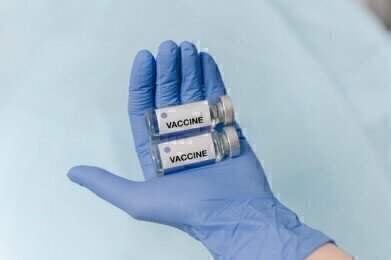
Freeze drying, a process that uses ultra-low temperatures and high-pressure vacuums to dehydrate and preserve specimens, is omnipresent in the pharmaceutical and diagnostic sectors. Also known as lyophilisation, the process extracts water in vapour form and leaves behind a bone-dry specimen that’s much easier to store, transport and analyse. Below, we explore how freeze drying is used in the pharmaceutical and diagnostic sectors, including its role in the development of IVD tests and COVID-19 vaccines.
Pinpointing the optimal temperatures
Temperature is key to the freeze drying process. Advanced analytical instruments are used to determine optimal freeze drying temperatures and preserve the integrity of samples. This prevents the risk of molecular degradation due to dehydration stress and ensures samples can be used to collect reliable and accurate data.
Storage and transportation
Once dehydrated, freeze dried samples can generally be stored at room temperature for long periods of time. For this reason, freeze drying is a popular method of preservation for a variety of sample types, including DNA. Desiccators are often used to prevent freeze dried samples from absorbing moisture during transit.
“We recommend freeze drying of DNA samples, especially when they have to be shipped for longer distances. No special packaging or declaration is needed for freeze dried samples, and the risk of thawing is excluded,” reads a report published in the European Journal of Soil Biology.
The use of cryo and lyo protectants
The use of cryo and lyo protectants can help preserve proteins during the freeze drying process and keep specimens as unadulterated as possible. As well as preserving the quality of a specimen, cryo and lyo protectants can help to increase shelf life, improve stability and streamline the reconstitution process. This has been critical to the development and rollout of COVID-19 vaccines.
Bio-banking and the freeze drying sector
From cancer research to COVID-19 vaccines, biobanks play a critical role in advancing scientific research. These highly secure repositories rely on next-generation preservation technologies to store biological materials and support future research. While low temperature storage is a preservation technology employed by many biobanks, freeze drying has been gaining traction for its energy saving properties.
How is AI impacting the freeze drying process?
Over the past decade, artificial intelligence (AI) has revolutionised freeze drying processes. Biopharma Group is a pioneer in lyophilisation AI, with in-house process analytical technology (PAT) and Dynamic Vapour Sorption (DVS) used to generate real-time data in pharmaceutical and diagnostic labs.
Want to know more about how freeze drying technology is continually evolving and adapting? Dr. Mattia Cassanelli, Technical Manager of the Consultancy Division at Biopharma Group, explores the impact of the pandemic further in ‘A 2020 Hindsight Look at How COVID-19 Has Affected the Freeze Drying Industry and What We Have Learned from It.'

Digital Edition
Lab Asia Dec 2025
December 2025
Chromatography Articles- Cutting-edge sample preparation tools help laboratories to stay ahead of the curveMass Spectrometry & Spectroscopy Articles- Unlocking the complexity of metabolomics: Pushi...
View all digital editions






Events
Jan 21 2026 Tokyo, Japan
Jan 28 2026 Tokyo, Japan
Jan 29 2026 New Delhi, India
Feb 07 2026 Boston, MA, USA
Asia Pharma Expo/Asia Lab Expo
Feb 12 2026 Dhaka, Bangladesh