Laboratory products
How Are Samples Processed in Labs?
May 31 2021
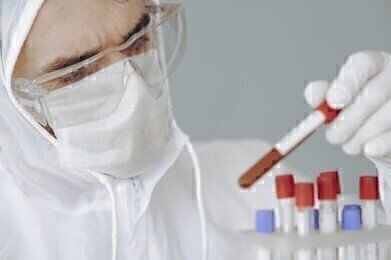
Sample processing is a key stage of analysis. Best-practice sample processing methods not only safeguard the integrity of the sample and minimise the risk of contamination, but also protect laboratory personnel. As soon as a sample enters the laboratory, a number of steps must be followed to prepare the sample for testing. While all laboratories are different and will have their own unique sample processing procedures in place, most feature the key steps outlined below:
Verify labelling
The first step is to ensure the sample has been properly labelled and is easily identifiable. Information should include the date and time of collection, sample type, patient name and demographic if applicable and a list of the tests that need to be performed.
Once labelling has been established sample information should be entered into a laboratory register or log. This can be done either manually or digitally. Samples that arrive at a laboratory without clear labelling are generally rejected.
Check quantity and quality
Before being analysed, researchers must also check there is a sufficient quantity of sample. If the sample is too small, it may be unsuitable for testing and deliver inaccurate results. Similarly, the sample must be of good quality. If the sample does not meet quantity and quality requirements it may be rejected.
To maintain accuracy and precision all gold-standard laboratories have clear sample rejection criteria in place. As well as lack of labelling, reasons for rejection can include leaking containers, haemolysis (the destruction of blood cells) and excessive transport time. Keeping tabs on sample rejection rates is important as it can help identify where and when to roll out sample collection training.
Unique laboratory ID numbers
Most gold-standard laboratories are given their own unique laboratory identification number which is added to the sample during the processing stage. When samples are added to the official laboratory register, they should include the unique laboratory identification number, as well as the date and time the sample was received.
Workplace health and safety
Samples should be treated as though they’re infectious throughout processing. Even well-labelled samples may have been contaminated or could contain unknown pathogens. For this reason, it’s best to assume all samples are infectious and exercise a high level of caution.
Advances in laboratory equipment technologies are continually reimagining the way samples are prepared and analysed. Find out more about the next-generation ANALYSETTE 28 ImageSizer from industry-leading laboratory equipment manufacturer Fritsch in ‘Automatic Dispersing System for Particle Analysis in Suspensions and Emulsions’.

Digital Edition
Lab Asia Dec 2025
December 2025
Chromatography Articles- Cutting-edge sample preparation tools help laboratories to stay ahead of the curveMass Spectrometry & Spectroscopy Articles- Unlocking the complexity of metabolomics: Pushi...
View all digital editions








Events
Jan 21 2026 Tokyo, Japan
Jan 28 2026 Tokyo, Japan
Jan 29 2026 New Delhi, India
Feb 07 2026 Boston, MA, USA
Asia Pharma Expo/Asia Lab Expo
Feb 12 2026 Dhaka, Bangladesh




