Laboratory products
Could There Be Another Pandemic After COVID-19?
Dec 21 2020
From the plague and smallpox to yellow fever and the Spanish flu, the world has seen its share of pandemics. While COVID-19 has been declared one of the worst, health experts warn it will not be the last pandemic to sweep the globe. Instead, scientists say urban development and the destruction of habitats has created a “perfect storm” for diseases to jump from wildlife to humans.
Predicting the risk factor of wildlife-borne diseases
The warning comes from health experts who study the development of infectious diseases, and the transition many make from animals to humans. Following the COVID-19 pandemic, a team of scientists from the University of Liverpool has developed an innovative pattern-recognition system designed to predict which wildlife-borne diseases are at risk of infecting humans and sparking another global pandemic.
“In the last 20 years, we've had six significant threats - SARS, MERS, Ebola, avian influenza and swine flu," says Professor Matthew Baylis, Oxenhale Chair of Veterinary Epidemiology at the University of Liverpool. "We dodged five bullets but the sixth got us. And this is not the last pandemic we are going to face, so we need to be looking more closely at wildlife disease.”
Giving science a head start
After mapping thousands of wildlife-borne viruses, bacteria and parasites, Baylis and his team developed a predictive pattern-recognition system. The system taps into the database and uses clues and signatures to identify the pathogens that pose the highest risk to humans. Once flagged, scientists can then get a head start on research and the development of treatments and vaccines. Ideally, the system would help prevent future pandemics before they happen.
“It will be another step altogether to find out which diseases could cause a pandemic, but we're making progress with this first step," says Baylis.
Wildlife conservation key to preventing modern pandemics
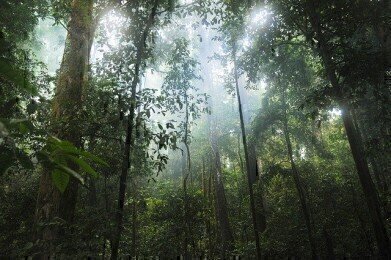
Another preventative solution being explored is the conservation of habitats. Urban development has resulted in alarming deforestation, which forces wildlife to coexist with humans. Professor Kate Jones from University College London says “biodiversity loss can create landscapes that increase risky human-wildlife contact and increase the chances of certain viruses, bacteria and parasites spilling over into people." She adds that scientific evidence "broadly suggests that human-transformed ecosystems with lower biodiversity, such as agricultural or plantation landscapes, are often associated with increased human risk of many infections.”
To find out more about the latest scientific advances don’t miss ‘Barcoded Tube Rack Readers for Automation’, which introduces new liquid-handling robot technology being integrates into laboratories around the world.


Digital Edition
Lab Asia Dec 2025
December 2025
Chromatography Articles- Cutting-edge sample preparation tools help laboratories to stay ahead of the curveMass Spectrometry & Spectroscopy Articles- Unlocking the complexity of metabolomics: Pushi...
View all digital editions





Events
Jan 21 2026 Tokyo, Japan
Jan 28 2026 Tokyo, Japan
Jan 29 2026 New Delhi, India
Feb 07 2026 Boston, MA, USA
Asia Pharma Expo/Asia Lab Expo
Feb 12 2026 Dhaka, Bangladesh