Laboratory products
Can You Test for Previous COVID-19 Exposure?
May 28 2020
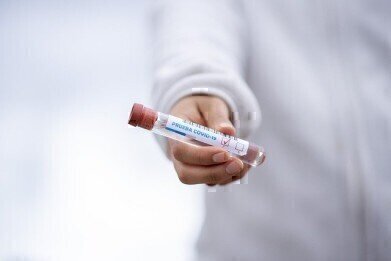
As the knowledge base for COVID-19 grows, a team of scientists from the American Chemical Society has developed a test that can detect SARS-CoV-2 antibodies in just 10 minutes. The ultra-sensitive test uses human blood samples to identify antibodies created in response to COVID-19 and could help offer more insight into how many asymptomatic cases exist. The test could also help doctors track exposure patterns, as well as test the accuracy of existing testing methods that have previously delivered negative results on suspected COVID-19 cases.
“Simple and rapid immunodiagnostic methods are urgently needed to identify positive cases,” reads the abstract.
New testing technique could reveal extent of asymptomatic cases
The proof-of-concept study comes as countries around the world are showing signs of flattening the COVID-19 curve and emerging from lockdown. Moving forward, public health officials are starting to focus on determining how many people have been infected, with antibody tests set to play an important role in crunching the numbers. Experts predict the number of infections could be much higher than anticipated, as COVID-19 symptoms range from severe to extremely mild and in some cases, non-existent.
Quick, simple and accurate, the new test developed by the American Chemical Society is designed to fast track widespread testing in the United States. Ideally, this will help identify people with mild or invisible symptoms and help stop community transmission.
Harnessing lateral flow immunoassay (LFA) technology
The test was developed using lateral flow immunoassay (LFA), a technique also used in home pregnancy tests. It involves adding human serum to a strip of nitrocellulose treated with a viral coat protein. As the serum flows down the strip, antibodies bind to the viral coat protein region. The team then used a fluorescently labelled antibody to detect COVID-19 antibodies.
“Here we report the development of a rapid and sensitive lateral flow immunoassay (LFIA) that uses lanthanide-doped polystyrene nanoparticles (LNPs) to detect anti-SARV-CoV-2 IgG in human serum,” explains the abstract.
As well as testing serum samples from seven patients who had previously tested positive for COVID-19, the team also analysed 12 samples from people with negative results. As well as successfully identifying antibodies in all seven positive former COVID-19 patients, the LFA technique identified antibodies in one of the ‘negative’ samples. All the tests were carried out in just 10 minutes, an impressive timeframe that could help ramp up testing rates around the world.
When it comes to flattening the COVID-19 curve, good hygiene is key. To find out more about how scientists are working to contain the spread using next-generation laboratory techniques and equipment, don’t miss ‘Ways to tackle the spread of coronavirus using viricidal surface decontamination.’

Digital Edition
Lab Asia Dec 2025
December 2025
Chromatography Articles- Cutting-edge sample preparation tools help laboratories to stay ahead of the curveMass Spectrometry & Spectroscopy Articles- Unlocking the complexity of metabolomics: Pushi...
View all digital editions








Events
Jan 21 2026 Tokyo, Japan
Jan 28 2026 Tokyo, Japan
Jan 29 2026 New Delhi, India
Feb 07 2026 Boston, MA, USA
Asia Pharma Expo/Asia Lab Expo
Feb 12 2026 Dhaka, Bangladesh




