Laboratory products
Can Human Sperm Be Grown in a Laboratory?
Sep 28 2016
Scientists are constantly finding new ways to aid the development of life. Innovations and enhancements in child birth. Medicine to treat infant diseases. And now, potentially, sperm cultivation. A team of French scientists have claimed to be coming ever closer to the creation of sperm in a laboratory environment. Read on to see if their claims are valid.
The need for human sperm
You might be thinking why? Why would scientists want or need to create sperm? Well there is a need for it. When women need surgery for ovarian cancer, for instance, they can have their eggs frozen in case they want children after the surgery. Similarly, men can have their sperm frozen if they require surgery on their reproductive organs. But when boys need treatment for childhood cancer, they don’t yet have sperm to freeze, meaning they wouldn’t be able to have biological children in their adult life.
How it works
Sperm (spermatozoa) as we know it is the product of a process called spermatogenesis. Through this process, primordial male germ cells are developed in motile sperm cells that can fertilise eggs in reproduction. Before puberty, boys don’t have these developed spermatozoa cells and so they cannot be frozen. However, what they do have are spermatogonia – essentially undeveloped sperm cells.
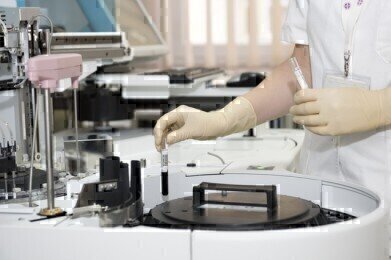
The process of lab-based sperm production begins by taking the biopsies that contain these spermatogonia. This undeveloped testicular tissue is then coated with a permeable gel which allows oxygen and carbon dioxide to pass in and out of the cells. It’s then treated with a mixture of nutrients, vitamins and hormones for 72 days, which eventually produces fully grown sperm.
Kallistem, the team behind the project, tested the idea on rats before using donated human tissue. But while they’re claiming it’s the first laboratory-grown human sperm, critics argue it’s not actually close to the real thing. For one, the sperm has not actually been used to fertilise eggs. This would have been problematic to prove for humans, but for rats it was possible. Either way, it’s a step in the right direction.
Sperm as DNA
While sperm cells are central to reproduction, they’re also important in DNA analysis. With DNA in the nucleus of a sperm cell and an estimated one million spermatozoa per male ejaculate, the analysis of sperm for DNA is central to some sexual assault cases. This important matter is explored along with other DNA profiling topics in ‘DNA: Collection and Interpretation’.
Digital Edition
Lab Asia Dec 2025
December 2025
Chromatography Articles- Cutting-edge sample preparation tools help laboratories to stay ahead of the curveMass Spectrometry & Spectroscopy Articles- Unlocking the complexity of metabolomics: Pushi...
View all digital editions









Events
Jan 21 2026 Tokyo, Japan
Jan 28 2026 Tokyo, Japan
Jan 29 2026 New Delhi, India
Feb 07 2026 Boston, MA, USA
Asia Pharma Expo/Asia Lab Expo
Feb 12 2026 Dhaka, Bangladesh




