Pipettes
Pipetting has come a long way since the technique was first pioneered by French chemist Louis Pasteur in the 1940s and German physician Heinrich Schnitger in the 1950s. Today scientists enjoy access to a range of different pipetting types, including:
Below, we take a look at some of the best-practice techniques used to maximise accuracy and precision when using pipettes.
Selecting the correct pipette/tip combination is one of the most effective ways to improve accuracy and reduce errors. Operators should aim for the smallest air cushion possible.
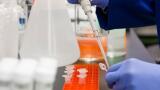
Ideally, the tip should be immersed as little as possible into the solution. This prevents the transfer of liquid on the exterior of the tip. That said, operators should be careful to avoid shallow immersion that results in the uptake of air.
German-based biotech company Eppendorf recommends the following depths:
Ideally, the pipette should be vertical to maximise liquid uptake. When pipettes are held at an angle, hydrostratic pressure changes can affect aspiration and compromise accuracy.
Saturating the air cushion prior to aspirating liquid can help to improve accuracy. Ideally, the tip should be pre=wet at least three times.
When discharging liquid, the pipette should touch the wall of the target vessel. For volumes less than 10 μL, liquid can be discharged directly into the sample.
While laboratories can be fast-paced environments, pipetting workflows should remain slow and steady to maximise accuracy and prevent operator errors.
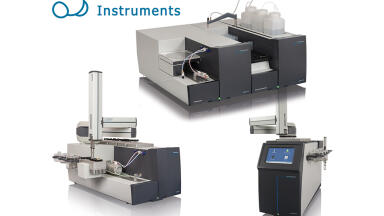
However, this can be tedious which is why many laboratories choose to invest in high throughput liquid handling technologies to fast-track workflows. These advanced automated and robotic systems offer a range of benefits, including optimising walk-away time for scientists and laboratory personnel. This allows highly skilled experts to redirect their attention to other tasks such as data analysis.
Find out more about the latest pipetting solutions, including technologies being used for drug development, mass spectrometry (MS), food and drink analysis, Next-generation sequencing (NGS) and Polymerase Chain Reaction (PCR) tests in ‘Liquid Handling - What, Why & How?’
.jpg)
-(2).jpg)