-
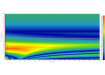
 Comparing risk of evaporation in wells during a (q)PCR run in a one-component PP plate(left) and a two-component PP (wells) and PC (frame) plate (right). Red denotes high risk, yellow is medium risk and green (low risk).
Sample preparation
Improving qPCR results with two-component plate design
Dec 19 2024
Azenta Life Sciences highlights how the innovative two-component design of its FrameStar® microplate range minimises thermal expansion and sample evaporation, leading to improved qPCR consistency.
Traditional PCR and qPCR plates, often made from polypropylene due to its chemical inertness and efficient temperature transfer, can experience thermal expansion and evaporation, impacting applications such as qPCR and Next Generation Sequencing. FrameStar plates address these challenges with a unique construction combining polypropylene tubes and a polycarbonate frame.
A recent study demonstrated that FrameStar plates significantly reduce evaporation-related qPCR inaccuracies, enabling the use of smaller reaction volumes and lowering costs associated with expensive reagents. Additionally, the polycarbonate frame's rigidity prevents plate distortion and seal weakening during PCR, ensuring reliable data for precise quantification.
Available in 96- and 384-well formats, FrameStar plates cater to diverse experimental needs. The 384-well plates are ideal for low-volume reactions, while the 96-well plates come in various configurations, including low- and high-profile designs with multiple skirt options.
Download a copy of the study now.
More information online
Digital Edition
Lab Asia Dec 2025
December 2025
Chromatography Articles- Cutting-edge sample preparation tools help laboratories to stay ahead of the curveMass Spectrometry & Spectroscopy Articles- Unlocking the complexity of metabolomics: Pushi...
View all digital editions









Events
Jan 21 2026 Tokyo, Japan
Jan 28 2026 Tokyo, Japan
Jan 29 2026 New Delhi, India
Feb 07 2026 Boston, MA, USA
Asia Pharma Expo/Asia Lab Expo
Feb 12 2026 Dhaka, Bangladesh




