-
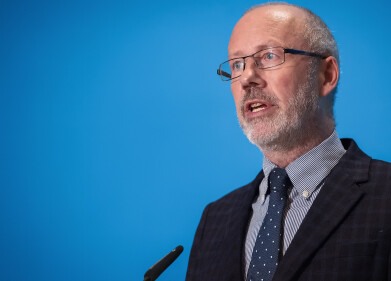
.jpg) Dr Ahmad Mannan Credit: University of Warwick
Dr Ahmad Mannan Credit: University of Warwick -
 Professor Declan Bates Credit: University of Warwick
News
Can Microbial Factories provide Genetic Switching for Biochemicals?
Jun 25 2021
“The ability to switch on bacteria into chemical production mode permanently is a massive step forward to realising economically viable scale up of chemical production from microbes,” – Ahmad Mannan.
Producing high value chemicals which are used daily for almost everything from food preservatives to pharmaceuticals, is a costly process; industrial chemistry processes currently use fossil fuels which account for around 14% of all greenhouse gas emissions. The synthesis of many of these petrochemical derivatives also require expensive chemical switching, or inducers, to achieve end results, limiting commercial potential in a process that is unsustainable.
Rerouting bacterial chemistry
An exciting alternative is to engineer bacteria as “cell-factories” with a genetic switch that reroutes their chemistry to produce high-value chemicals, such as biofuels, polymers and pharmaceuticals and researchers from the University of Warwick have found a cheap way to switch bacteria into chemical production mode.
Led by Dr Ahmad Mannan and Professor Declan G. Bates from Warwick’s Integrative Synthetic Biology Centre at the School of Engineering, new theoretical research investigated how biosensors from E. coli that respond to cheap natural nutrients like oleic acid can be harnessed to create switches. Using mathematical models and the engineering principles of feedback control loops, commonly used in flight control systems, they discovered how to design a genetic switch in bacteria that removes the reverting “spring”, so that adding only a pulse of a cheap natural nutrient can switch the cell to chemical production mode permanently – drastically cutting costs.
Versatility for synthetic biology toolbox
Dr Mannan said: “The ability to switch on bacteria into chemical production mode permanently is a massive step forward to realising economically viable scale up of chemical production from microbes. The switch should be widely applicable to many industrially relevant microbes and for the synthesis of almost any chemical – a versatile component in the Synthetic Biology toolbox. The next steps of our research would be to uncover the principles to understand where in the chemical roadmap to apply this “traffic light” and perhaps look to collaborating with industry where it could be readily incorporated into existing fermentation processes.”
Professor Bates added: “Using cutting-edge synthetic biology techniques our work has laid out the framework for constructing the proposed irreversible switch in the lab. Not only could our work change the way chemical industries make high-value chemicals, it also contributes to the larger vision for how humans can move away from reliance on non-renewable resources, to enabling sustainable synthesis of biochemicals, for a greener, cleaner future.”
‘Designing an irreversible metabolic switch for scalable induction of microbial chemical production’, is published in the journal Nature Communications,
More information online


Digital Edition
Lab Asia Dec 2025
December 2025
Chromatography Articles- Cutting-edge sample preparation tools help laboratories to stay ahead of the curveMass Spectrometry & Spectroscopy Articles- Unlocking the complexity of metabolomics: Pushi...
View all digital editions









Events
Jan 21 2026 Tokyo, Japan
Jan 28 2026 Tokyo, Japan
Jan 29 2026 New Delhi, India
Feb 07 2026 Boston, MA, USA
Asia Pharma Expo/Asia Lab Expo
Feb 12 2026 Dhaka, Bangladesh




