-
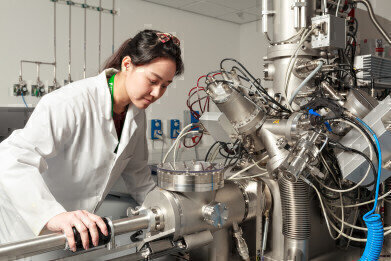 3DOrbSIMS instrument in use
News
Centre to Transform Imaging of Cells, Tissues and Materials
Jan 18 2019
Nottingham has launched a world first university research facility for label-free chemical imaging of materials, cells and tissues, through its ownership and operation of a 3DOrbiSIMS production instrument. Situated in the University’s Nanoscale and Microscale Research Centre, the instrument has potential to transform research in biomedical implants, drug delivery systems, developing strategies to tackle antimicrobial resistance, organic electronic devices and engineering applications.
Professor Morgan Alexander and Professor Paul Williams from the Schools of Pharmacy and Life Sciences have recently led the discovery of bacteria resistant materials that are now being trialled in catheters to reduce infection rates.
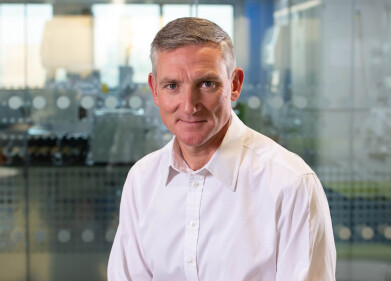
“This facility gives us the capability to identify biological molecules in samples from complex biological environments, such as the human body, without being restricted by our existing understanding. This is a very exciting prospect in areas where the knowledge of the fundamental processes underlying biological responses is still developing, such as in explaining why bacteria colonise certain plastics and not others. Equally it provides the opportunity to identify and locate known compounds such as drug molecules in biological samples like human cells, which is critical in the development of future generations of drug therapy. This capability has great application in both academic and industrially based research programmes; we are very excited about collaborating with colleagues from the UK and around the world.”
Funding for the new £2.5m facility at Nottingham, which is complemented by high pressure freezing cryo-preparation facilities, was supported by an award from the Engineering and Physical Sciences Research Council. The 3D OrbiSIMS is a concept from the National Physical Laboratory, where the first prototype instrument is based. These two instruments put the UK in a very strong global position for molecular imaging to support academia and industry.
The concept was created by Professor Ian Gilmore, who led the multidisciplinary team with experts in drug discovery at GlaxoSmithKline and the University of Nottingham. Leading mass spectrometry companies, ION-TOF GmbH and Thermo Fisher Scientific were also part of the team. They designed and integrated their technologies into a single platform in the development prototype installed at NPL.
Professor Gilmore said: “Before the arrival of the 3DOrbiSIMS, ToF-SIMS, images were too often of molecules that could not be identified. In analogy to the Hubble space telescope, before the upgrade “clusters” of molecules of nearby mass, typical of biology, could not be resolved and this has frustrated scientific discovery for decades. The 3DOrbiSIMS allows these mass “clusters” to be fully resolved and identified and like the upgraded Hubble space telescope, enables high-resolution views for discovery in the molecular world.”
NanoPrime is an EPSRC - University of Nottingham funded access scheme with grants of up to £15k available for academia and industry to access the 3DOrbiSIMS and other instrumentation and expertise within the nmRC for proof of concept and pump priming studies.
Digital Edition
Lab Asia Dec 2025
December 2025
Chromatography Articles- Cutting-edge sample preparation tools help laboratories to stay ahead of the curveMass Spectrometry & Spectroscopy Articles- Unlocking the complexity of metabolomics: Pushi...
View all digital editions









Events
Jan 21 2026 Tokyo, Japan
Jan 28 2026 Tokyo, Japan
Jan 29 2026 New Delhi, India
Feb 07 2026 Boston, MA, USA
Asia Pharma Expo/Asia Lab Expo
Feb 12 2026 Dhaka, Bangladesh




