
News
Researchers visualize molecular ruler for bacterial survival
Dec 22 2014
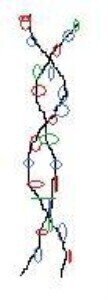
Scientists from the University of St Andrews in the UK and Guelph in Canada, have discovered how bacteria can survive and outsmart the human immune system, through X-ray and ultraviolet light studies that have enabled visualisation of a biological molecular control mechanism.
Prof James Naismith from the University of St Andrews explains the significance of this work, "The molecular ruler, which we've shown to be a rigid coiled-coil protein/protein complex, is critical as without it bacteria have no idea when to stop producing the long polymers that are attached to their outer membranes. The length of these sugar polymers are controlled in the same way as curtain makers pull and measure their rolls of fabric before deciding where to make their cut. It is a beautiful and elegant demonstration of form and function."
Prof Naismith continues, "This project involved scientists from St Andrews, along with collaborators from Germany, Canada and Diamond Light Source. We used a combination of experimental techniques at Diamond, the UK's national synchrotron science facility and the European Molecular Biology Laboratory (EMBL) in Germany, to piece together the structure of this molecular ruler and crucially to prove that it is possible to change the length of it and, in doing so, change the length of the polymer. This opens up a new avenue of research whereby we can look to design drugs that interfere with the ruler. The work gives chemists something to aim for, the elegant solution to controlling polymerisation: a problem in many industrial processes."
Dr Rohanah Hussain, Senior Beamline Scientist on Diamond's Circular Dichroism beamline adds, "This project demonstrates how important it is for scientists to draw on a variety of techniques. In this case, the team carried out structural studies with crystallography and X-ray scattering, before turning to the capabilities of intense ultraviolet light to confirm that the ruler manipulation was occurring in the manner they predicted; a crucial test of the idea."
Scientists are in a race against antimicrobial resistance, which currently threatens the effective prevention and treatment of an ever-increasing range of infections caused by bacteria, viruses, parasites and fungi, including HIV, infections caused by E. coli, tuberculosis, influenza and malaria.
Professor Naismith concludes, "The work is part of my long term link with Chris Whitfield's lab in Canada; the real credit belongs to Drs Gregor Hageluken, Brad Clarke and Hexian Huang, the lead scientists in our labs, who did the vast bulk of the experiments. It is their skilful experimental work alongside our collaborators from Germany and Diamond that made this insight possible. I want to thank the Wellcome Trust who funded this work as well as Diamond and EMBL at DESY, Hamburg for access to their facilities"
Insights into nature's molecular ruler and how it can be engineered and modified to help in the fight against disease opens up a new avenue of research for scientists with exciting potential for novel drug design development in the future.
The work was funded by a Wellcome Trust Senior Investigator Award to
Professor Naismith who is a Royal Society Wolfson Merit Award Holder.
He is also a non-Executive director of Diamond Light Source Ltd.
*Publication: A coiled-coil domain acts as a molecular ruler to regulate O-antigen chain length in lipopolysaccharide, Nature Structural and Molecular Biology, DOI:10.1038/nsmb.2935


Digital Edition
Lab Asia Dec 2025
December 2025
Chromatography Articles- Cutting-edge sample preparation tools help laboratories to stay ahead of the curveMass Spectrometry & Spectroscopy Articles- Unlocking the complexity of metabolomics: Pushi...
View all digital editions








Events
Jan 21 2026 Tokyo, Japan
Jan 28 2026 Tokyo, Japan
Jan 29 2026 New Delhi, India
Feb 07 2026 Boston, MA, USA
Asia Pharma Expo/Asia Lab Expo
Feb 12 2026 Dhaka, Bangladesh




