-
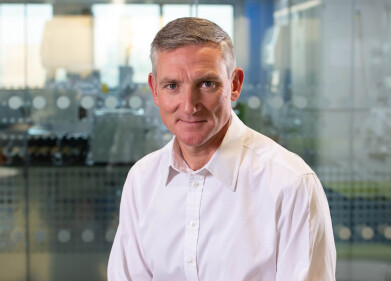
 Research team of Professor Gilbertson Credit CRUK Cambridge Institute
News
Discovery changes thinking around Cancer Metastasis
Oct 04 2022
“These findings are among the most important to have come out of my lab for three decades” Richard Gilbertson
New research by scientists at the University of Cambridge have discovered that cancer cells can ‘hijack’ a process used by healthy cells to spread around the body. The team, based at the Cancer Research UK (CRUK) Cambridge Institute, found that blocking the activity of the NALCN protein in cells in mice with cancer triggers metastasis; and were also surprised to find that the removal of NALCN from mice without cancer also caused healthy cells to leave their original tissue and travel around the body where they joined other organs.
For example, healthy cells from the pancreas which migrated to the kidney became healthy kidney cells, suggesting that metastasis isn’t an abnormal process limited to cancer as previously thought, but is a normal process used by healthy cells that has been exploited by cancers to migrate to other parts of the body to generate metastases.
Group Leader for the study and Director of the CRUK Cambridge Centre, Professor Richard Gilbertson, said: “These findings are among the most important to have come out of my lab for three decades. Not only have we identified one of the elusive drivers of metastasis, but we have also turned a commonly held understanding of this on its head, showing how cancer hijacks processes in healthy cells for its own gains. If validated through further research, this could have far-reaching implications for how we prevent cancer from spreading and allow us to manipulate this process to repair damaged organs.”
NALCN (sodium (Na+) leak channel, non-selective) are leak channels expressed predominately in the central nervous system and throughout the rest of the body. These channels control the amount of salt – sodium – that goes in and out of the cell, a process that also alters the balance of electricity across the cell membrane. It is not yet clear why these channels seem to be implicated so directly in cancer metastasis.
Lead researcher on the study Dr Eric Rahrmann, said: “We are incredibly excited to have identified a single protein that regulates not only how cancer spreads through the body, independent of tumour growth, but also normal tissue cell shedding and repair. We are developing a clearer picture on the processes that govern how cancer cells spread. We can now consider whether there are likely existing drugs which could be repurposed to prevent this mechanism from triggering cancer spreading in patients.”
The research, published in Nature Genetics was funded by CRUK
More information online



Digital Edition
Lab Asia Dec 2025
December 2025
Chromatography Articles- Cutting-edge sample preparation tools help laboratories to stay ahead of the curveMass Spectrometry & Spectroscopy Articles- Unlocking the complexity of metabolomics: Pushi...
View all digital editions









Events
Jan 21 2026 Tokyo, Japan
Jan 28 2026 Tokyo, Japan
Jan 29 2026 New Delhi, India
Feb 07 2026 Boston, MA, USA
Asia Pharma Expo/Asia Lab Expo
Feb 12 2026 Dhaka, Bangladesh




