-
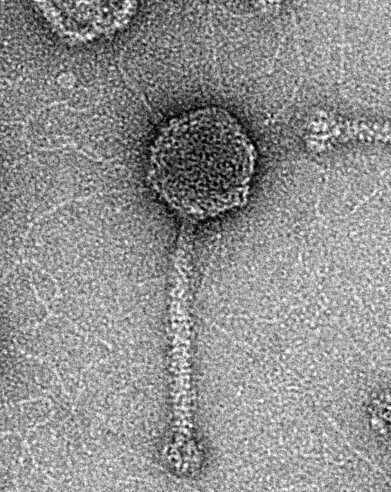 Microscope image of phage virus. (Credit: Biomedical Imaging Unit, UHS.)
 -

-
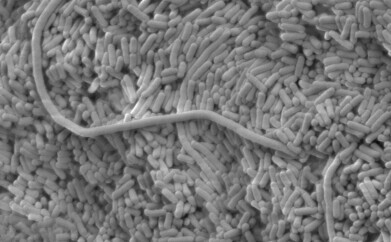 Microscope image of bacteria. (Credit: Biomedical Imaging Unit, UHS)
Research news
Combined bacterial defences ward off viruses
Mar 18 2024
Scientists at the University of Southampton have discovered how bacteria can pair up their defence systems, creating a formidable force to fight off attack from phage viruses. Because phage viruses, or bacteriophages, can kill harmful bacteria without affecting the good bacteria in our bodies, an understanding of how bacteria respond to attacks of this kind could be crucial in exploring how phage viruses might be harnessed to fight infections as an alternative to antibiotics.
Lead author of the study, Dr Franklin Nobrega of the University of Southampton’s School of Biological Sciences said: “Just like how our immune system protects us from harmful germs, bacteria have their own set of defence systems which create a dynamic shield against viral threats. Imagine if your white blood cells, antibodies and killer T-cells all joined forces to fight off a virus together. This is exactly what is happening inside bacterial cells.
“We used to think of bacterial defence as a solo act, but it turns out it’s more like a buddy system. A ‘dynamic duo’ of defence systems merge their powers to mount a stronger response than they otherwise would have achieved, potentially saving the cell from destruction.”
Using existing datasets of paired defence systems in the genomes of some 42,000 bacteria, including E. coli, the researchers looked for those that appeared more frequently then would normally be expected. A selection of these were tested in the lab for enhanced virus immunity and, crucially, ‘synergy - a defence effect in the bacteria which is more powerful than the sum of its parts.
From identified enhanced systems and with further testing, they were able to see for the first time how the partnerships between individual bacterial defences are based on one system using a function from another to improve its activity. Combined, they have a more robust effect than working apart.
Phages are already in use as a last-resort treatment for antibiotic-resistant bacterial infections, a practice known as phage therapy. But by delving into how bacteria defend against these phages, we can supercharge our strategies to make them even more effective at wiping out bacterial cells, offering a glimmer of hope in the battle to keep infections at bay, Dr Nobrega added.
The scientists added that their research will complement efforts already underway to develop phage therapy through public participation initiatives such as The Phage Collection Project and the open science KlebPhaCol project.
The funding for this study was from the Wessex Medical Trust and the National Institutes of Health USA. Findings were published in Cell Host & Microbe.
More information online

Digital Edition
Lab Asia Dec 2025
December 2025
Chromatography Articles- Cutting-edge sample preparation tools help laboratories to stay ahead of the curveMass Spectrometry & Spectroscopy Articles- Unlocking the complexity of metabolomics: Pushi...
View all digital editions








Events
Jan 21 2026 Tokyo, Japan
Jan 28 2026 Tokyo, Japan
Jan 29 2026 New Delhi, India
Feb 07 2026 Boston, MA, USA
Asia Pharma Expo/Asia Lab Expo
Feb 12 2026 Dhaka, Bangladesh




