

Research news
Less complex light found to boost emerging AI computations
Aug 09 2024
An international research collaboration comprising scientists from the Universities of Oxford, Muenster, Heidelberg and Ghent, have discovered that replacing lasers with less strict light sources can boost performance in some emerging light-driven applications, such as with a photonic AI accelerator – where photons are used instead of electrons to perform AI computations.
Their surprising insight opens the way for cheaper, less energy-intensive light sources to be used in applications that have typically relied on expensive, high-spec lasers.
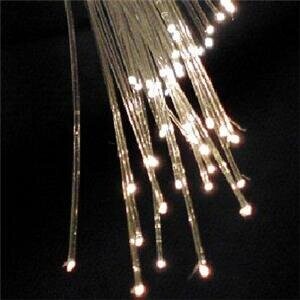
The researchers used a partially coherent light source by harnessing a narrow portion of the spectrum of incoherent light produced by an electrically-pumped erbium-doped fiber amplifier (a device used in optical communication to boost the strength of light signals traveling through optical fibers). This light was evenly split and distributed into different input channels for a parallel AI computational array. Using such a light source, the parallelism of AI computation was enhanced by N times in a photonic accelerator with N input channels.
As a test case, the team used this system to identify Parkinson’s disease patients by analysing how they walked, achieving a classification accuracy of 92.2%. They also demonstrated the use of a simple system using only one partially coherent light source with 9 input channels to perform high-speed AI tasks at around 100 billion operations per second.
First author Dr Bowei Dong at the Department of Materials, University of Oxford, explains: “The benefit of using ‘poorer’ light sources has a scaling effect. You can run your AI models 100 times faster compared to a laser system, if the photonic accelerator scales to 100 input channels.”
Co-first author Dr Frank Brückerhoff-Plückelmann at the Kirchhoff-Institute for Physics, Heidelberg University said: “A more important aspect is that our system does not rely on lasers. It saves effort in optical control, such as frequency locking and thermal management. And you don’t have to worry about phase errors because the system works purely on light intensity.”
Professor Harish Bhaskaran, Department of Materials, University of Oxford and co-founder of Salience Labs, who led the work said: “While this work showcases the use of such partially coherent light in some emerging areas of photonic computing, we will in future also investigate whether this insight might apply to optical communications, particularly in the emerging optical interconnect technology space. This is an area of research that is moving rapidly with a lot of interesting science and engineering to explore.”
More information online



Digital Edition
Lab Asia Dec 2025
December 2025
Chromatography Articles- Cutting-edge sample preparation tools help laboratories to stay ahead of the curveMass Spectrometry & Spectroscopy Articles- Unlocking the complexity of metabolomics: Pushi...
View all digital editions










Events
Jan 21 2026 Tokyo, Japan
Jan 28 2026 Tokyo, Japan
Jan 29 2026 New Delhi, India
Feb 07 2026 Boston, MA, USA
Asia Pharma Expo/Asia Lab Expo
Feb 12 2026 Dhaka, Bangladesh




