-
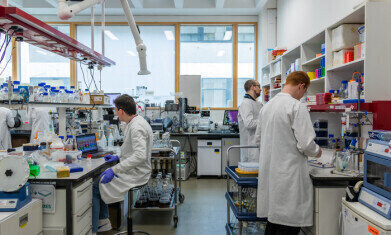 Scientists make breakthrough in fridge-free storage (Credit: University of Manchester)
Research news
Fridge-free storage for vital medicines
Aug 05 2024
Scientists from the Universities of Manchester, Glasgow and Warwick, have developed a breakthrough approach for storing and distributing crucial protein therapeutics without the need for fridges or freezers, which could significantly improve accessibility of essential protein-based drugs in developing countries.
Their new hydrogel – a material mostly made of water – stabilises proteins, protecting its properties and functionality at temperatures as high as 50°C.
Dave Adams, Professor at the University of Glasgow’s School of Chemistry and a corresponding author said: “The technology we’ve developed marks a significant advance in overcoming the challenges of the existing ‘cold chain’ which delivers therapeutic proteins to patients. The results of our tests have proved very encouraging, going far beyond current hydrogel storage techniques’ abilities to withstand heat and vibration. That could help create much more robust delivery systems in the future, which require much less careful handling and temperature management.”
The hydrogel is built from a low molecular weight gelator (LMWG) material, which forms a three-dimensional network of long, stiff fibres. When proteins are added to the matrix, they become trapped in the spaces between the fibres; this prevents them from mixing or forming aggregates, thus preserving their effectiveness as medicines.
The unique mechanical properties of the gel’s network of fibres, which are stiff but also brittle, ensures the easy release of a pure protein. When the protein-storing gel is stored in an ordinary syringe fitted with a special filter, pushing down on the plunger provides enough pressure to break the network of fibres, releasing the protein. The protein then passes cleanly through the filter and out the tip of the syringe alongside a buffer material, leaving the gel behind.
Corresponding author Professor Matthew Gibson, from the University of Manchester said: “Delivering and storing proteins intact is crucial for many areas of biotechnology, diagnostics and therapies. Recently, it has emerged that hydrogels can be used to prevent protein aggregation, which allows them to be kept at room temperature, or warmer. However, separating the hydrogel components from the protein or proving that they are safe to consume is not always easy. Our breakthrough eliminates this barrier and allows us to store and distribute proteins at room temperature, free from any additives, which is a really exciting prospect.”
The team are now exploring commercial opportunities for this patent-pending technology as well as further demonstrating its applicability.
Researchers from the University of East Anglia and Diamond Light Source Ltd also contributed to the research.
‘Mechanical release of homogenous proteins from supramolecular gels’, is published in Nature.
More information online

Digital Edition
Lab Asia Dec 2025
December 2025
Chromatography Articles- Cutting-edge sample preparation tools help laboratories to stay ahead of the curveMass Spectrometry & Spectroscopy Articles- Unlocking the complexity of metabolomics: Pushi...
View all digital editions







Events
Jan 21 2026 Tokyo, Japan
Jan 28 2026 Tokyo, Japan
Jan 29 2026 New Delhi, India
Feb 07 2026 Boston, MA, USA
Asia Pharma Expo/Asia Lab Expo
Feb 12 2026 Dhaka, Bangladesh




