-
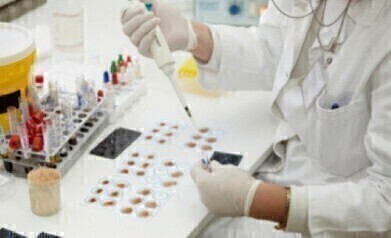 Scientists develop assay to determine virus infectivity status
Research news
New assay determines virus infectivity
Aug 06 2024
Scientists at the University of Birmingham have developed a new method that can rapidly determine whether a virus is infectious or non-infectious – a potential means to revolutionise the response to future pandemics.
Dr Samuel Jones from Birmingham’s School of Chemistry led the research team that developed the FAIRY (Fluorescence Assay for vIRal IntegritY), assay, capable of screening viruses against virucidal antivirals in minutes, allowing for the effectiveness of antiviral measures, such as disinfectants that break the chain of infection, to be quickly determined.
“On average, every four years a new virus is discovered that has pandemic potential, and there are many more already known viruses that could cross the species barrier. Yet to best of our knowledge there is currently no assay capable of identifying whether a sample contains intact or non-intact viruses, and therefore shows whether it is infectious or non-infectious, without cell cultivation that could take weeks, ” said Dr Jones.
The new method uses a dye that can ordinarily penetrate viruses through pores in the capsid (protein shell) that surrounds its genetic material (DNA or RNA). This dye is conjugated to a larger molecule, which prevents it from penetrating the capsid pores. When the dye binds to viral DNA or RNA it provides a fluorescent signal. The resulting assay shows whether the virus is intact, and therefore infectious, or not.
The researchers have evaluated the effectiveness of the assay using herpes simplex virus (HSV-2), respiratory syncytial virus (RSV), cytomegalovirus (CMV), Human Rhinovirus-8 (HRV-8), Human Coronavirus OC43 (OC43), chikungunya virus (CHIKV), Dengure virus 1 and dengue virus 2, zika virus, and enterovirus 71 (EV71).
These viruses cover the spectrum of enveloped and non-enveloped as well as DNA and RNA viruses, truly showing the potential of the FAIRY assay. Viruses were treated with a wide range of chemicals that have broad-spectrum virucidal activity, including hydrogen peroxide, ethanol, isopropanol and other antivirals, and these tests confirmed that the FAIRY assay has potential for the rapid study of virucides that destroy viral capsids.
Dr Jones said: “This simple, low-cost, assay uses ready-made consumables and can rapidly screen multiple disinfectants and viruses, in a single microplate assay, for their ability to neutralise viral infectivity. It could have screened every disinfectant for antiviral activity during the SARS-CoV-2 pandemic and so deliver a more rapid response during the next pandemic.”
The Fairy method is published in ACS Biomacromolecules
More information online

Digital Edition
Lab Asia Dec 2025
December 2025
Chromatography Articles- Cutting-edge sample preparation tools help laboratories to stay ahead of the curveMass Spectrometry & Spectroscopy Articles- Unlocking the complexity of metabolomics: Pushi...
View all digital editions









Events
Jan 21 2026 Tokyo, Japan
Jan 28 2026 Tokyo, Japan
Jan 29 2026 New Delhi, India
Feb 07 2026 Boston, MA, USA
Asia Pharma Expo/Asia Lab Expo
Feb 12 2026 Dhaka, Bangladesh




