-
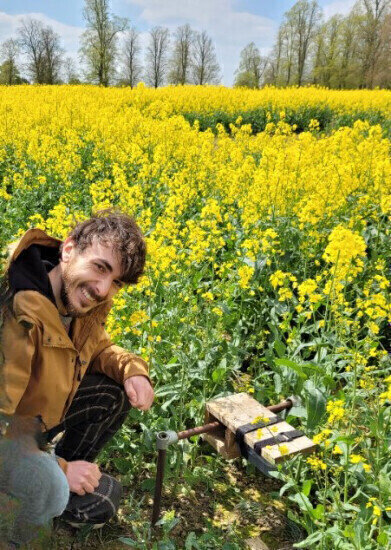 Researcher Gaetan Seimani-Corda setting up camera traps in an oilseed rape field. Credit: Rothamsted Research
Research news
Cameras uncover natural predators controlling oilseed rape pests
Apr 04 2025
In an exciting new development, cameras placed in oilseed rape fields have revealed a surprising ally in the battle against crop pests - beetle larvae. Over two years, researchers in the UK uncovered how the larval stages of predatory Carabid beetles are highly effective at preying on two of the most destructive pests to oilseed rape: the pollen beetle (Brassicogethes aeneus) and the brassica pod midge (Dasineura brassicae).
Ecologists have long relied on camera traps to monitor wildlife, but using them to study invertebrates is a relatively recent innovation. Traditionally, pitfall traps have been the tool of choice for tracking predatory insects, yet these traps have been shown to miss a key player - the predatory beetle larvae, which were found to have a far greater impact on pest control than previously understood.
What makes these findings [1] so intriguing is the behaviour of the beetle larvae. They leave their underground homes to actively hunt pest larvae at a crucial moment in the pests’ life cycle: when they drop to the ground to pupate. This synchronisation between predator and prey offers a unique opportunity for more targeted pest management strategies.
According to Dr Sam Cook, who led the research: “By recognising the key role that beetle larvae play in controlling pests naturally, farmers can embrace biocontrol strategies to enhance these natural predators, reducing the need for harmful chemical pesticides and boosting biodiversity.”
The study also uncovered fascinating patterns in the predators' activity. Beetle larvae were found to be most active at night, with increased predation occurring at dusk and dawn - when the pests are most vulnerable. Interestingly, the pollen beetle larvae dropped most frequently at dusk, while the brassica pod midge larvae were more likely to fall at dawn.
With oilseed rape crops under constant threat from pests, these findings could provide a sustainable, cost-effective alternative to chemical interventions. Encouraging beetle larvae populations in the fields could be a game-changer for eco-friendly farming, helping to preserve valuable predator species while protecting crops.
Dr Cook concluded: “These results underscore the potential of cameras as essential tools for ecological research. As farming moves toward more sustainable practices, this innovative approach to pest management could be a vital part of the solution, leveraging nature’s own defences.”
More information online
- Identifying insect predators using camera traps reveal unexpected predator communities in oilseed rape fields. Biological Control, Volume 198,2024, 105636, ISSN 1049-9644



Digital Edition
Lab Asia Dec 2025
December 2025
Chromatography Articles- Cutting-edge sample preparation tools help laboratories to stay ahead of the curveMass Spectrometry & Spectroscopy Articles- Unlocking the complexity of metabolomics: Pushi...
View all digital editions










Events
Jan 21 2026 Tokyo, Japan
Jan 28 2026 Tokyo, Japan
Jan 29 2026 New Delhi, India
Feb 07 2026 Boston, MA, USA
Asia Pharma Expo/Asia Lab Expo
Feb 12 2026 Dhaka, Bangladesh




