-
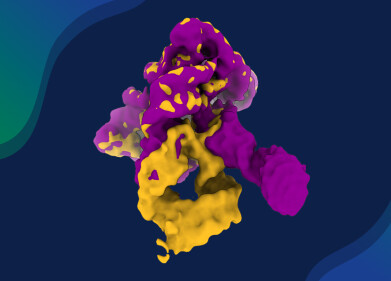
.jpg) A 3D model of a bovine blood vessel. Credit: Liverpool School of Tropical Medicine
A 3D model of a bovine blood vessel. Credit: Liverpool School of Tropical Medicine -
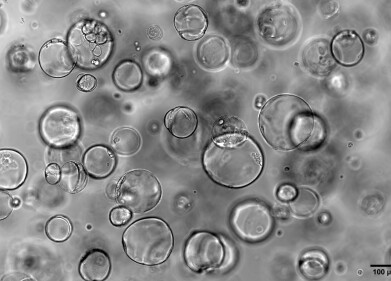
.jpg) Animal African trypanosomiases are a major burden on livestock health across sub-Saharan Africa, leading to millions of dollars in economic losses every year. Credit: Liverpool School of Tropical Medicine
Animal African trypanosomiases are a major burden on livestock health across sub-Saharan Africa, leading to millions of dollars in economic losses every year. Credit: Liverpool School of Tropical Medicine
Research news
Bioengineered blood vessels shed light on trypanosome tactics
Apr 30 2025
Microscopy meets molecular parasitology in a study [1] that redefines how we investigate deadly livestock infections. Using advanced bioengineering, scientists have built the first realistic 3D microvessel models of cow brain and heart tissue - revealing how Trypanosoma congolense, the parasite behind animal African trypanosomiasis, clings to blood vessel walls and dodges immune attack.
Researchers from the Liverpool School of Tropical Medicine, Universidade Católica Portuguesa, the Gulbenkian Institute for Molecular Medicine, and EMBL Barcelona have created tissue-mimicking microenvironments that go far beyond flat cell cultures. These new 3D models replicate the flow dynamics and physical structure of real bovine vessels, enabling researchers to observe parasite behaviour in unprecedented detail.
What they found upends textbook assumptions. The team demonstrated that parasite ‘sequestration’ - its ability to anchor to blood vessels - is controlled by flow conditions and a key signalling pathway, allowing the parasite to grow and persist in the host. Yet surprisingly, this process isn’t needed for transmission to the tsetse fly, suggesting the parasite's disease-causing strategies are more complex than previously thought.
The implications are wide-reaching. “For the first time, we can study host-parasite interactions under conditions that mimic real life, not just plastic dishes,” said Dr Aitor Casas-Sanchez. “This opens the door to testing therapies that block sequestration and could help save millions in agricultural losses.”
With the brain especially vulnerable, T. congolense build-up can trigger stroke-like symptoms and fatal outcomes in cattle. These models will help decode how the parasite spreads, survives and damages tissue - while offering a platform to trial sequestration inhibitors that could transform treatment.
Inspired by similar advances in malaria research, this fusion of microengineering and microscopy offers a powerful route to tackling trypanosomiasis. As Dr Casas-Sanchez puts it: “We’re not just building models - we’re building hope for livestock and communities affected by this devastating disease.”
More information online
1. Bioengineered 3D microvessels and complementary animal models reveal mechanisms of Trypanosoma congolense sequestration published in Communications Biology

Digital Edition
Lab Asia Dec 2025
December 2025
Chromatography Articles- Cutting-edge sample preparation tools help laboratories to stay ahead of the curveMass Spectrometry & Spectroscopy Articles- Unlocking the complexity of metabolomics: Pushi...
View all digital editions









Events
Jan 21 2026 Tokyo, Japan
Jan 28 2026 Tokyo, Japan
Jan 29 2026 New Delhi, India
Feb 07 2026 Boston, MA, USA
Asia Pharma Expo/Asia Lab Expo
Feb 12 2026 Dhaka, Bangladesh




