Laboratory products
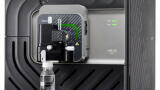
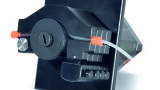
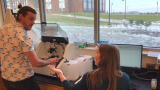
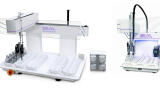
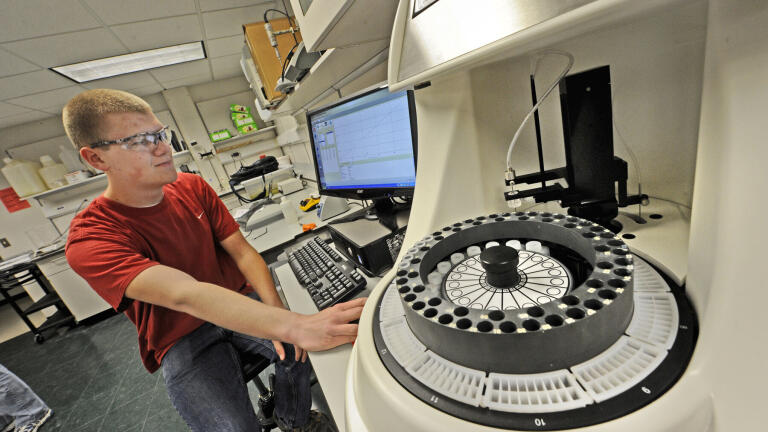
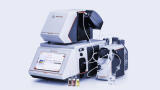
Lake Superior State University recently purchased a Seal AQ1 discrete analyser for its Environmental Analysis Laboratory (EAL). This advanced instrument was purchased to analyse local, regional and national water quality samples. However, it also fulfils an important role providing the University’s students with practical experience; working with an analyser that is employed in laboratories around the world.
The AQ1 enables students to gain hands-on experience with automated nutrient testing for many common environmental parameters with detection limits in parts per billion.
Performing automated colorimetric tests on multiple samples in discrete reaction vessels, the AQ1 is ideal for laboratories with moderate workloads requiring varied tests on different samples, and for those that need fast individual results.
The instrument is supplied with standard methods to USEPA, ASTM, ISO and other internationally recognised standards for the analysis of a wide variety of parameters including alkalinity, ammonia, chloride, cyanides, nitrate/nitrite, nitrite, phenolics, ortho phosphate, total phosphorus, silicate, sulphate and total Kjeldahl nitrogen.
With unattended operation including the ability to run overnight, the AQ1 has all the advantages of discrete analysis – automatic standard preparation, automatic dilution, automatic method changeover, and low reagent consumption.
Interchangeable 60 or 78 position sample trays improve flexibility and with easy-to-use software, users are able to schedule tests (up to 60 per hour) and specify QC types, limits and corrective actions following a QC failure. It is also possible to add further samples after a test run has begun. Highly accurate analysis is achieved with 100% optical glass no-flow cuvettes and the maximum consumption of combined reagents and sample is 500 – 600 µL per test.
Reaction times are user programmable from seconds to minutes and all methods have been optimised to ensure that the chemical reaction is brought to full completion and steady state, which maximises sensitivity and emulates both the Manual and the Segmented Flow Methods. Once the absorbance is read, the cuvette is thoroughly cleaned, eliminating any carryover or cross-contamination.
During the summer of 2013 the lab supported twelve student-faculty research projects including Professor Derek Wright’s monitoring of the Ashmun Creek and Munuscong watersheds, and Laboratory Manager Ben Southwell’s work to characterise waters at risk from harmful cyanobacteria blooms.
The lab also conducts contract work for public and private clients and offers paid internships to students that are looking for experience in a state-of-the-art lab; in 2013 eight students were employed as technicians.
“We are delighted that our analyser has been chosen by this prestigious laboratory,” says Lalicia Potter, Seal’s Technical Sales & Support Director.
“Not only is the instrument making a major contribution to the lab’s ongoing environmental analysis workload, but it is also contributing to the education and experience of tomorrow’s scientists.”

.jpg)
-(2).jpg)