Laboratory products
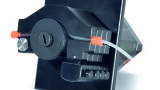
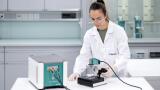
The modular concept of the brand-new DEA 288 Epsilon by Netzsch allows for the study of the UV curing behavior of adhesives, paints, inks and coatings. Dielectric Analysis (DEA) can be used for nearly all thermosetting resins – not only in the laboratory environment, but also in-process.
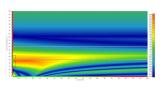
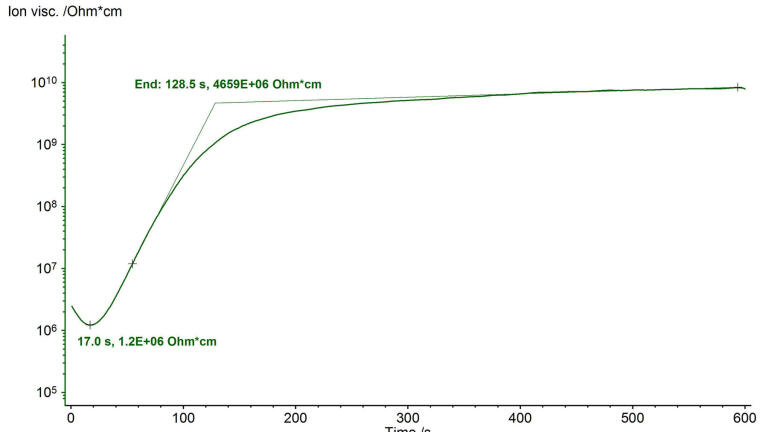
The example depicts the UV curing of a sealant based on a 1-component epoxy resin which is used for the protection of organic LEDs. The liquid resin was applied with a thickness of approx. 200 μm to the surface of the disposable IDEX comb sensor and measured at 1000 Hz at room temperature. An irradiation intensity of 55-60 mW/cm² was applied with an irradiation time of 60s.
Initially, the so-called ion viscosity drops due to the input of heat by the UV lamp. The evaluated minimum after 17 s corresponds to the lowest viscosity and therefore the best flow behavior. UV curing begins immediately thereafter, with an increase in ion viscosity of nearly four orders of magnitude. After approx. 300 s, the ion viscosity curve levels out, signaling that curing is practically completed.
To get more information for a special application – please do not miss to visit our booth 318 at the ECS 2013 in hall 6.
.jpg)
-(2).jpg)