Laboratory products
Malvern Instruments has added dynamic light scattering (DLS) Microrheology to its portfolio of materials characterisation techniques. To introduce this powerful technique, the company has published an in-depth paper that explains the background to microrheology, and how it can be used to investigate the rheological properties of even the most weakly structured fluids, using sample volumes on the microlitre scale. ‘An Introduction to DLS Microrheology’ includes data for protein (bovine serum albumin (BSA)) and polyethylene oxide (PEO) solutions that illustrate the significance and usefulness of the method. It is freely available from the Malvern website at
Microrheology is a relatively new analytical methodology that has been the subject of increasing academic study over the past 15 years, and is of growing interest to those researchers working at the forefront of rheological characterisation. It involves tracking the motion of colloidal tracer particles dispersed in a complex fluid sample, in order to extract the viscoelastic properties of the system. DLS Microrheology has attributes that are particularly advantageous for characterising low viscosity samples, such as polymer or protein solutions, and extends the measurement range and application of rheology well beyond the regimes accessible with even the most sophisticated mechanical rheometers.
‘An Introduction to DLS Microrheology’ provides a general overview of microrheology techniques, before going on to focus on DLS Microrheology and the underlying theory. Practical aspects of microrheology are discussed in some detail, with guidance on method development and sample preparation, both of which are particularly important factors for robust measurements. The paper concludes with some experimental data that demonstrate applicability.
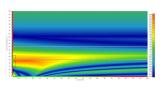
These data show how DLS Microrheology, combined with conventional rotational rheology, can significantly extend the measured viscoelastic spectrum for polymer solutions for characterisation of short timescale dynamics, and demonstrate its value for protein solution characterisation. The results indicate that the development of solution viscoelasticity can be used to investigate the onset of protein aggregation in denaturing BSA solutions, as well as assessing solution viscosity as a function of concentration to determine onset of non-Newtonian flow properties.


.jpg)
-(2).jpg)