.jpg)
Laboratory products
Improving PCR performance through smart temperature control
Jul 05 2017
One of the most widely used techniques in molecular biology is polymerase chain reaction (PCR), a method used to amplify small sections of DNA or RNA in a sample by adding primers, nucleotides, DNA polymerase and other reagents. In this way, millions of copies of the target segments can be generated from a small amount of sample in a matter of hours and in amounts large enough for scientists to analyze in various applications, ranging from basic research to high-throughput screening.
The sensitivity of PCR in being able to amplify just one or a few copies of target DNA is due to the repeated polymerase reaction cycles, each of which generates double the DNA sequence of interest. The specificity of the technique is down to the DNA oligonucleotide primers that enable DNA polymerase to initiate duplication of sequences. Furthermore, the annealing of primers to the DNA target is highly stringent, thereby minimizing any possibility of misfit.
Using PCR to elucidate transcription and translation
One area where PCR has attracted significant attention is in the field of genetics. In a study by researchers from the Netherlands, the value of PCR was demonstrated in an analysis of gene expression that tested the conventional understanding of the relationship between transcription and translation.
Boris Slobodin (Netherlands Cancer Institute) and team investigated whether there is any link between the two processes, since they are generally considered as uncoupled, despite their serving a common purpose.
By using an unbiased screen of various human promoters, the team managed to identify a general coupling between mRNA expression and translational efficiency. They cloned human promoters in a Promoter Library after the addition of random barcodes, which were detected by real-time reverse transcription-PCR (qRT-PCR) using specific primers. The barcodes were then PCR amplified to construct libraries that could be deep sequenced. As reported in Cell, the study showed a general and robust link between the transcription and translation of RNA, as well as providing insight into the underlying epigenetic mechanism by which transcription imprints molecules of mRNA.
Highly accurate temperature control
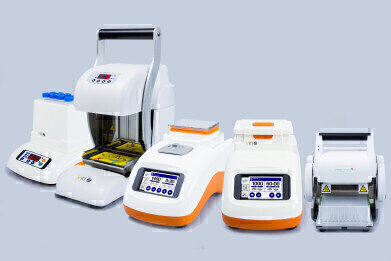
During assay preparation, any well-to-well temperature differences in PCR plates can introduce variability in the samples and affect the accuracy of measurements. Vitl Life Science Solutions, a leading supplier of laboratory mixers and heaters, produces products to ensure variability is removed and accuracy is maximized during laboratory procedures such as PCR sample preparation.
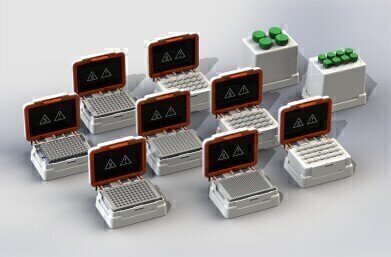
One of the latest additions to Vitl’s portfolio is the Flexi-Therm dry block heater, an instrument designed to ensure excellent temperature accuracy whether samples are being thawed, preheated or maintained after having already been mixed. With its straightforward digital touch control interface, excellent temperature accuracy (+/- 0.1°C), visual countdown timer and audible alert, users can simply load their modules onto the Flexi-Therm, select a temperature and wait to be told when the heating program is finished. When combined with Vitl’s range of Intelligent Heated Modules users are able to create and store heating protocols with ease.

Digital Edition
Lab Asia Dec 2025
December 2025
Chromatography Articles- Cutting-edge sample preparation tools help laboratories to stay ahead of the curveMass Spectrometry & Spectroscopy Articles- Unlocking the complexity of metabolomics: Pushi...
View all digital editions









Events
Jan 21 2026 Tokyo, Japan
Jan 28 2026 Tokyo, Japan
Jan 29 2026 New Delhi, India
Feb 07 2026 Boston, MA, USA
Asia Pharma Expo/Asia Lab Expo
Feb 12 2026 Dhaka, Bangladesh




