Laboratory products
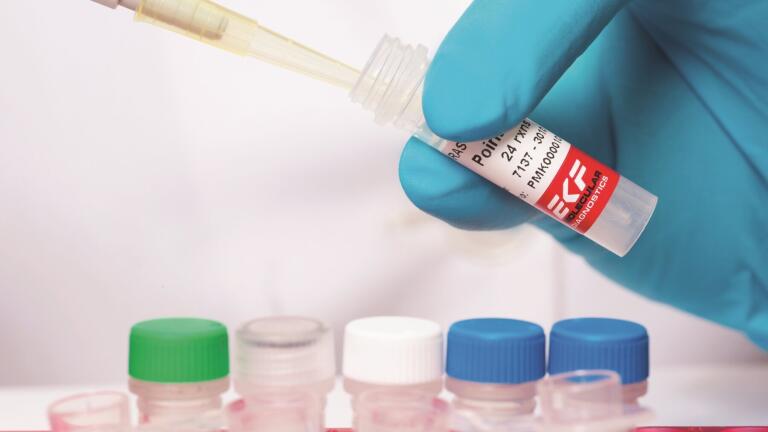
EKF Diagnostics announces that the latest results from its collaboration with the Institute of Life Sciences at the University of Swansea, UK, have continued to confirm the effectiveness of its PointMan™ DNA enrichment technology for isolating and characterising low-level DNA mutations in blood.
Following work undertaken by the Swansea-based team earlier this year, which successfully detected circulating free DNA (cfDNA) mutations from melanoma patients using PointMan, further studies were carried out on blood samples from endometrial and lung cancer patients, archived in the Wales Cancer Bank. The latest results demonstrated the sensitivity of PointMan in detecting cfDNA mutations – BRAF (endometrial cancer) and EGFR (lung cancer) - which could therefore serve as a test for these biomarkers in the early detection of these cancers.
Based on the promise of these initial proof-of-concept results, EKF is now sponsoring an MSc studentship to further evaluate the use of PointMan to enrich mutant variants in cfDNA isolated from patients suffering from, or at risk of developing, gynecological cancers. PointMan’s extreme sensitivity offers a unique advantage in the early detection and monitoring of disease progression, as well as in assessing the efficacy of ongoing anti-cancer treatments, without the need for a tissue biopsy.
Based at the Institute of Life Sciences, the ongoing project aims to correlate the presence and abundance of specific mutant variants of known endometrial and ovarian cancer biomarkers in cfDNA from blood samples of patients with established clinical diagnoses for these conditions. Ultimately, the results will establish whether these biomarkers provide a better diagnosis, or enhance current diagnostic tests.
The latest data from Swansea also compliment recent work undertaken using the GILUPI CellCollector™, a device for collecting circulating tumour cells (CTCs) directly from a patient’s blood stream. This highlighted the utility of a blood-based test and critically demonstrated that PointMan can detect just three mutant cells in a background of 1000 wild type cells. A control PCR reaction was unable to achieve such sensitivity, which is important as it reflects the number of mutant cells in a typical patient sample.

.jpg)
-(2).jpg)