Laboratory products
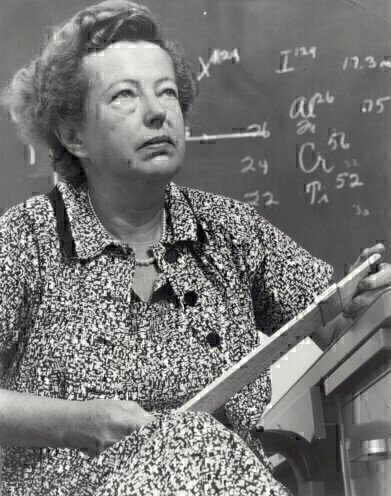
Women in Physics - Maria Goeppert-Mayer
Oct 25 2018
In a recent presentation at CERN, Professor Alessandro Strumia provoked outrage with his comments that physics was 'invented and built by men'. In a timely fashion, Dr Donna Strickland was recently awarded the Nobel Prize for Physics, making her the third woman in history to do so.
In response to Strumia’s comments, Labmate's 6-part series will take a closer look at the women who have shaped physics into the science of today. Make sure you take a look at our previous post, about the inspirational Lise Meitner.
Today, we’re going to delve into the life and career of Nobel Prize winner, Maria Goeppert-Mayer…
Born into science
Born in 1906 in Germany (now Poland), Goeppert-Mayer was the only child of progressive professor Friedrich Goeppert. After moving to Göttingen, Germany, in 1910, she was educated at a girls’ grammar school ran by suffragettes. The school closed due to bankruptcy in her junior year, but she passed a collegiate exam without a high school diploma.
Goeppert-Mayer enrolled at the University of Göttingen and eventually earned her PhD under Max Born in 1930. That same year, she married Dr. Joseph Edward Mayer and they both moved to the United States for work.
Life in America
During this time, women were widely regarded as unsuitable to work in the upper realms of academia. Despite Goeppert-Mayer’s doctorate, she was limited to unpaid and unofficial work in university laboratories. It was only due to her husband’s influence that she was permitted to work in the labs.
For the next few years, she worked in unofficial and volunteer positions in universities across America, taking any role that she could. Her husband, Joseph worked as a professor at the University of Chicago, where she volunteered as an Associate Professor of Physics.
Within a few months of working in Chicago, Goeppert-Mayer was offered her first big break. With the opening of the Argonne National Laboratory, she took a part-time job as a Senior Physicist. For the first time, she was working and being paid at a level matching her training and knowledge.
Nuclear Shell Model
2 years into her work at the Argonne National Laboratory, Goeppert-Mayer made the breakthrough that would go on to change her career. Working alongside Edward Teller, she identified and named the seven ‘magic numbers’ in physics, proposing that inside a nucleus, protons and neutrons are arranged in a series of nucleon layers.
During the same time, but working independently, J. Hans D. Jensen and Eugene Paul Wigner reached the same conclusion. The three scientists were awarded the Nobel Prize in Physics in 1963 for their proposal of the nuclear shell model. Goeppert-Mayer, along with Marie Curie and Donna Strickland is one of the 3 women to ever win the Nobel Prize in Physics.
The nuclear shell model has gone on to influence the work of countless scientists and has shaped how we view physics today. Goeppert-Mayer was one of the many women who went through personal sacrifice – working unpaid in roles she was over-qualified for – in order to allow today’s women to thrive.
Stay tuned for our next inspirational woman in physics, Katherine Johnson, or check out ‘Accurate Measurements of Biological Nanoparticles’ for more on modern scientific developments.

Digital Edition
Lab Asia Dec 2025
December 2025
Chromatography Articles- Cutting-edge sample preparation tools help laboratories to stay ahead of the curveMass Spectrometry & Spectroscopy Articles- Unlocking the complexity of metabolomics: Pushi...
View all digital editions









Events
Jan 21 2026 Tokyo, Japan
Jan 28 2026 Tokyo, Japan
Jan 29 2026 New Delhi, India
Feb 07 2026 Boston, MA, USA
Asia Pharma Expo/Asia Lab Expo
Feb 12 2026 Dhaka, Bangladesh




