Laboratory products
How Was the 2018 World Cup Ball Tested?
Jul 13 2018
Come Sunday, all eyes will be on Moscow's Luzhniki Stadium as France and Croatia battle it out for football's most prestigious trophy. While talent and teamwork will play a pivotal role in securing victory, there's also been plenty of science poured into the tournament. Specifically, the all-important ball.
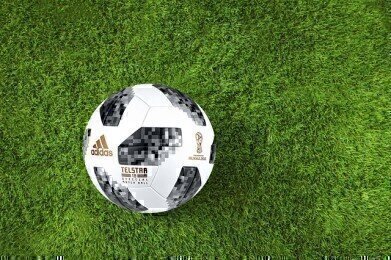
Adidas has been manufacturing official FIFA World Cup balls for decades, starting with the official Telstar Elast in 1970. For Russia's 2018 World Cup tournament the iconic sportswear brand launched the Telstar 18, a reimagined version of the 1970 original.
Introducing the Telstar 18
“The construction also provides enhanced power distribution and consistent response when struck,” boasted Adidas in an official statement. “The surface texture further optimises the ball’s flight, touch and surface glide.”
While it may look like a conventional soccer ball, Adidas has spent years perfecting the design.
“You could argue that it’s the most important piece of equipment in the most popular sport in the world,” says John Eric Goff, a physicist at Virginia's University of Lynchburg.
Exceptional aerodynamism
From an aerodynamic perspective, strikers are in luck when it comes to the Adidas Telstar 18. Goff asserts that the ball is similar to the Adidas Brazuca used in Brazil's 2014 tournament, which offered exceptional speed and accuracy. That said, due to six panels and 30% more seams that the Brazuca, the Telstar 18 will cover up to 10% less distance when kicked at high speeds.
To further explore the flight properties of the Telstar 18 Goff and his team measured the airflow around a stationary ball placed in a wind tunnel. This allowed them to observe the thin layer of air that hugs the ball as it travels at high speeds, as well as the turbulent currents that flow toward the back of the ball. They discovered that thanks to a streamlined design the ball undergoes its drag crisis and transitions to laminar flow at a lower speed of 38 miles an hour, which means the effect only kicks in for corner kicks and long passes.
Criticism from keepers
Despite its accolades goalkeepers were quick to criticise the ball, with Spaniards David de Gea describing it as "strange" and Pepe de Reina warning "goalkeepers are going to have a lot of problems with this ball." There have also been complaints that it's flighty and hard to grip.
From testing the aerodynamism of World Cup balls to conducting highly regulated Life Sciences research, modern laboratories call for advanced equipment. For a closer look at the growing popularity of fluorescence-based analytical methods don't miss 'New Confidence in Fluorescence - Developments in Instrument Qualification.

Digital Edition
Lab Asia Dec 2025
December 2025
Chromatography Articles- Cutting-edge sample preparation tools help laboratories to stay ahead of the curveMass Spectrometry & Spectroscopy Articles- Unlocking the complexity of metabolomics: Pushi...
View all digital editions










Events
Jan 21 2026 Tokyo, Japan
Jan 28 2026 Tokyo, Japan
Jan 29 2026 New Delhi, India
Feb 07 2026 Boston, MA, USA
Asia Pharma Expo/Asia Lab Expo
Feb 12 2026 Dhaka, Bangladesh




