Laboratory products
Analytical weighing is such a delicate process that absolute accuracy is needed.
Unfortunately, such accuracy can often be difficult to achieve, due to a variety of
factors. These include changes in temperature, barometric pressure or even the
gravitational pull of a particular location, which can seriously affect the readings of a
weighing device. Such problems can be avoided simply by calibrating the balance
before each use. Further details on the subject can be found in the article When and
Why You Should Calibrate Your Balance.
However, there is another factor which affects weighing output readings –
electrostatic charges. This one is not so easily solved by simple calibration.
Electrostatic Charges and Analytical Weighing
Charge that flows through a conductor is simply called electricity. However, charges
can also be produced in insulators (material which do not conduct the electricity)
when they come into contact with another surface (a process called friction). In a
laboratory setting, this most often occurs when a beaker or other vessel is rubbed
(normally for cleaning purposes) with a dry cloth.
This friction disrupts the balance of the positively charged nucleus with its
surrounding negatively charged neutrons, and creates electricity. But because there
is nowhere for this energy to go (being trapped in an insulator), it remains static, and
thus becomes known as electrostatic energy.
The presence of electrostatic energy can be quite a problem when it comes to
analytical weighing because the charge can affect the material being weighed, thus
yielding skewed results. Though the charges do fade and dissipate over time, their
very presence in the first place is a cause for concern when absolute accuracy is
required. The possibility of static charges developing upon the weighing vessels is
dependent largely on the humidity of the location. A room with higher humidity levels
will pose less of a threat to incorrect calculations than one with humidity levels lower
than 45%.
How to Avoid Skewed Results from Electrostatic Charges
Luckily, technology has risen to meet the challenge of interference from electrostatic
charges. Manufacturers of balances have developed a new sensor which can detect
the presence of electrostatic charge, and in doing so, offset the discrepancies in
weighing caused by the charge. This makes the process easier and more reliable.
For a more in-depth discussion of this innovative new method of analytical weighing,
please check out the article Integrated Electrostatic Detection in Analytical Weighing.
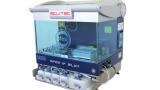
Another method of avoiding such discrepancies is by introducing a static eliminator
into the laboratory. This is especially pertinent in laboratories where a humidity level
of under 45% is present, and should be used before weighing to achieve maximum
accuracy.



.jpg)
-(2).jpg)