DNA / RNA
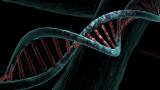
The analysis of DNA mutations in patients with cancer can be carried out without surgery.
This is according to new research from AACC's Clinical Chemistry journal, which demonstrated that the plasma of cancer patients also includes tumour-derived DNA.
As a result of the DNA sequencing of the plasma being non-invasive, cheap and highly informative clinical tools could be engineered in labs to diagnose cancer early and personalise therapies, leading to better health outcomes.
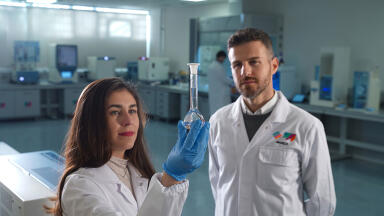
Researchers extracted DNA from the tumour tissues of four liver patients and one breast and ovarian cancer patient, before this data was analysed through preoperative and postoperative plasma samples.
By carrying out multiregional sequencing of tumour tissues and shotgun sequencing of plasma DNA, researchers have found that plasma DNA sequencing could be an effective tool in the fields of cancer detection, monitoring and research.
All cancers affect people as a result of DNA abnormalities, meaning that scientists can utilise DNA sequencing in laboratories to assess individual mutations, enabling treatments to be tailored for specific circumstances.
Previously, DNA sequencing required tumour tissue, which could only be obtained by biyopsing the tissue. However, the researchers looked into utilising shotgun massively parallel sequencing of plasma DNA from cancer patients to scan a cancer genome without surgery.
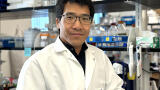
Eleftherios P. Diamandis , MD, PhD, FRCP, FRSC, Head of Clinical Biochemistry at Mount Sinai Hospital and Editor of this special issue of Clinical Chemistry, said: "This ground-breaking study uses brand new technology--the multiregional sequencing research tool will lead to routine practice leading to lower cost.
"This is the first time analysis has been done non-invasively instead of performing a biopsy on human tissue. The proof of principle is demonstrated and will be more readily available and cost effective in the future."
Avelas Biosciences is another company that has carried out research in a bid to find ways of stopping cancer.
Optics.org reported that it is planning to develop a fluorescence technique to identify the spread of cancer to lymph nodes in breast cancer patients.
Posted by Fiona Griffiths
.jpg)
-(2).jpg)