-
 Dr Amos Lee. Credit: Meteor Biotech
 -
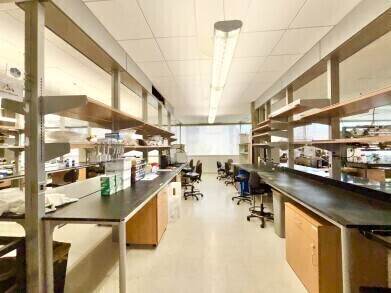 Spatial omics innovation expands to UCLA. Credit: Meteor Biotech
Company news
From Seoul to UCLA: Spatial omics innovation enters US biomedical research market
Jun 11 2025
New US base at UCLA aims to accelerate spatial omics and single-cell analysis in cancer, immunology, and neuroscience
South Korea’s Meteor Biotech has opened its first US office at UCLA, planting a flag in North America’s life sciences heartland to give drug developers and academic researchers local access to its cutting-edge spatial cell sorting technology, SLACS.
Located inside the California NanoSystems Institute - a hub for scientific collaboration and innovation - the new office is designed as a hands-on centre for demonstration, training, and pilot research, with a focus on cancer, neurodegenerative disease, immunology, and biomarker discovery.
Meteor’s flagship platform, SLACS (Spatially-Resolved Laser-Activated Cell Sorting), brings an unprecedented level of precision to tissue analysis. Unlike traditional methods that analyse bulk tissue, SLACS allows researchers to locate and extract individual cells directly from spatial contexts in tissue sections. That means scientists can now study the microenvironments of tumours or brain tissue with single-cell accuracy - something that was technically out of reach just a few years ago.
“This is a pivotal step for Meteor,” said Dr Amos Lee, co-founder and CEO. “We’re moving closer to the world’s largest base of biomedical R&D - not just geographically, but strategically. The US is at the forefront of funding, innovation, and application in life sciences. Setting up on the UCLA campus gives us a front-row seat to that ecosystem and allows our collaborators to engage directly with SLACS technology.”
SLACS has already gained attention for transforming spatial biology by enabling high-throughput, high-precision sampling of cells from intact tissues. It is expected to have a major impact on drug development, particularly in targeted immunotherapies and neuroscience, where understanding the local environment around cells is key.
Meteor’s UCLA site will initially focus on supporting researchers through demos, training, and on-site projects. The company is taking a phased approach, starting with one dedicated staff member and expanding based on demand. Future hires could include field applications scientists, support engineers, and sales staff.
No manufacturing is planned at the US site, but it will act as a launchpad for expanding across North America - with Europe likely next on the horizon.
With NIH biomedical research funding exceeding $48 billion in 2025, Meteor’s US launch comes at a time of rising interest in spatial omics. Researchers now have a local option to test and explore how SLACS can transform their work - whether they’re investigating tumour heterogeneity, mapping immune cell interactions, or decoding neural circuits.
“This is about more than proximity - it’s about building deeper, more collaborative relationships with the scientists pushing the boundaries of discovery,” added Lee.
More information online


Digital Edition
Lab Asia Dec 2025
December 2025
Chromatography Articles- Cutting-edge sample preparation tools help laboratories to stay ahead of the curveMass Spectrometry & Spectroscopy Articles- Unlocking the complexity of metabolomics: Pushi...
View all digital editions









Events
Jan 21 2026 Tokyo, Japan
Jan 28 2026 Tokyo, Japan
Jan 29 2026 New Delhi, India
Feb 07 2026 Boston, MA, USA
Asia Pharma Expo/Asia Lab Expo
Feb 12 2026 Dhaka, Bangladesh




