Chromatography
Who Discovered Quantum Entanglement?
Nov 05 2022
Every year the Royal Swedish Academy of Sciences recognises excellence across six categories, including physics. This year, Alain Aspect, John Clauser and Anton Zeilinger were awarded the Nobel Prize in Physics 2022 for their contributions to the field of quantum entanglement. The trio carried out radical experiments with particles in entangled states and in the process, unlocked exciting new tools for quantum information science.
“Using groundbreaking experiments, Alain Aspect, John Clauser and Anton Zeilinger have demonstrated the potential to investigate and control particles that are in entangled states,” reads a statement published by the Royal Swedish Academy of Sciences. “What happens to one particle in an entangled pair determines what happens to the other, even if they are really too far apart to affect each other. The laureates’ development of experimental tools has laid the foundation for a new era of quantum technology.”
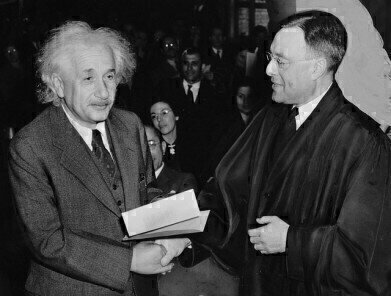
Einstein’s connection to quantum entanglement
Aspect, Clauser and Zeilinger may have been awarded the Nobel Prize in Physics 2022 for their quantum entanglement experiments. But they weren’t the first to explore the physical phenomenon. In the 1930s, Albert Einstein and his colleagues Nathan Rosen and Boris Podolsky published a paper describing quantum entanglement as “spooky action at a distance.” They couldn’t pinpoint the mechanics of quantum entanglement and instead attempted to explain it as a phenomenon powered by “hidden variables”.
Nonetheless, the concept of quantum entanglement was out there and eventually captured the attention of Irish physicist John Bell. In the 1960s Bell developed a method to test the hidden variables theory put forward by Einstein. He designed an equation called Bell’s inequality, which is 100% accurate when testing hidden variable theories but doesn’t explain quantum mechanics.
Nobel laureates step up
In the 2020s, Aspect, Clauser and Zeilinger built on the ideas put forward by Bell. Using entangled photons, they tested the Bell’s inequality and ruled out the hidden variable theory. In an interview with the Chief Scientific Officer of Nobel Prize Outreach, Aspect was quick to credit predecessors like Einstein and Bell. He says the award “comes as part of a great lineage of prizes in quantum mechanics” and credits German theoretical physicist Werner Karl Heisenberg for his pioneering work in quantum mechanics in the 1930s.
“Of course I am very impressed because I’m certainly not at the same level as these people who have really totally changed the physics. But then I am proud to be of the same league of course,” says Aspect. “In a sense my experiment was trying to find a limit of quantum mechanics, and we didn’t find it.”
Pushing the limits of science
From quantum entanglement to multimodal chromatography, scientists are continually pushing the limits with exciting new tools and technologies. Find out more about the cutting-edge techniques being used to purify proteins and other biological molecules in ‘Optimising Viral Vector Purification Strategies with Multimodal Chromatography’.
Digital Edition
Lab Asia Dec 2025
December 2025
Chromatography Articles- Cutting-edge sample preparation tools help laboratories to stay ahead of the curveMass Spectrometry & Spectroscopy Articles- Unlocking the complexity of metabolomics: Pushi...
View all digital editions










Events
Jan 21 2026 Tokyo, Japan
Jan 28 2026 Tokyo, Japan
Jan 29 2026 New Delhi, India
Feb 07 2026 Boston, MA, USA
Asia Pharma Expo/Asia Lab Expo
Feb 12 2026 Dhaka, Bangladesh




