Chromatography
How Could Your Cat's Food Help with Your Allergy?
Aug 29 2019
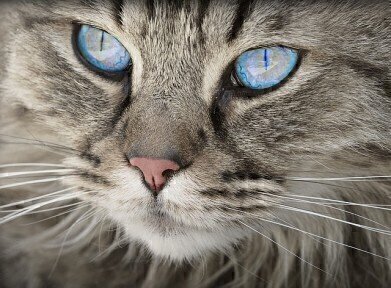
In a breakthrough study that could change the lives of cat lovers, pet-food manufacturer Purina has discovered that infusing chow with antibodies could help ease the symptoms of allergies. New research funded by the company explores the use of an antibody to actively target Fel d1, the major allergy-causing protein in cats. The findings suggest that introducing the antibody to cat food can reduce the amount of active Fel d1 protein found in cat hair and minimise allergic responses in humans.
"These allergens have created a huge barrier to cat ownership and may limit the loving interactions between cat lovers and cats," says Purina's director of molecular nutrition Ebenezer Satyaraj. "Our discovery has the potential to transform how people manage cat allergens."
Scientists use antibodies to neutralise allergy-triggering protein
Produced in the salivary and sebaceous glands of cats, Fel d1 is transferred to hair and dander during the grooming process. It's also excreted in urine, which means litter boxes can also trigger allergies. According to experts, the Fel d1 protein is responsible for around 95% of all cat allergies, which means finding a way to eliminate the protein could have a major impact on pet owners and animal lovers.
The small pilot study saw 105 cats fed the antibody for 10 weeks. On average, Fel d1 protein dropped by almost 50%. Hair from cats on the antibody diet was then exposed to 11 people with cat allergies, who experienced a significant reduction in eye and nasal symptoms than when exposed to cats in the control group.
Findings win global attention at allergy and immunology congress
The findings were presented at the recent European Academy of Allergy and Clinical Immunology Congress held in Lisbon, with Satyaraj explaining the antibody neutralises Fel d1 in the mouth by targeting saliva. This means Fel d1 is removed after the protein is produced by the cat, but before it spreads to the hair and dander where it can spark human allergies.
While the role Fel d1 plays in cat physiology is unknown, the researchers have observed no harmful side effects of limiting Fel d1 production. Purina has no immediate plans to launch antibody infused cat food on the consumer market, though the study does mark an exciting step forward for allergen research.
From privately funded projects such as the Purina study, to university led public research ventures, scientists are continually exploring new ways to accelerate innovation. For an introduction to the revolutionary new LSER method, don't miss 'Characterisation of RP Sorbents by Linear Solvation Energy Relationships (LSER)'

Digital Edition
Lab Asia Dec 2025
December 2025
Chromatography Articles- Cutting-edge sample preparation tools help laboratories to stay ahead of the curveMass Spectrometry & Spectroscopy Articles- Unlocking the complexity of metabolomics: Pushi...
View all digital editions










Events
Jan 21 2026 Tokyo, Japan
Jan 28 2026 Tokyo, Japan
Jan 29 2026 New Delhi, India
Feb 07 2026 Boston, MA, USA
Asia Pharma Expo/Asia Lab Expo
Feb 12 2026 Dhaka, Bangladesh




