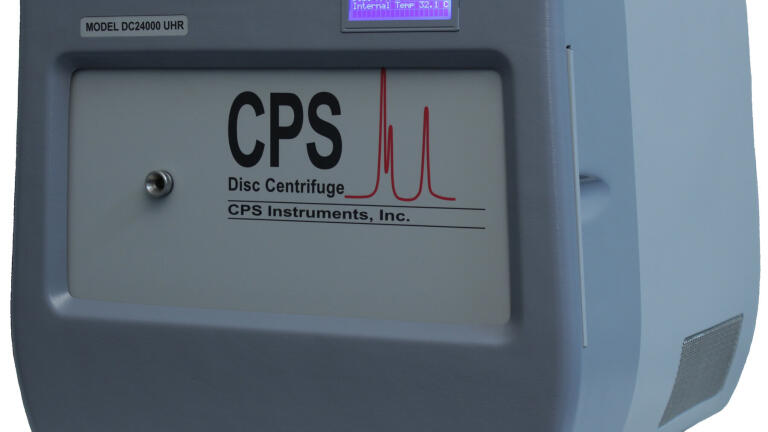
Centrifuge
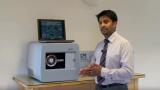
Analytik report on use of CPS Disc Centrifuges for high resolution nanoparticle size analysis at the University of Liverpool and University College Dublin.
Dr Željka Krpetić is working on developing high quality, next-generation nanomaterials for biomedical applications in addition to new analytical approaches for the challenging characterisation of nanoparticles in situ in complex biological fluids.
Dr Krpetić described her choice to use the CPS system: “The benefits and opportunities using the CPS system are numerous. Differential Centrifugal Sedimentation (DCS) is an ultra-high resolution technique that reliably measures the size of nanoparticles in solution of almost any material, provided the density is known. Its accuracy is coming from the fact that the technique measures all the particles in the sample injected to the CPS disc. The reproducibility of measurements is extraordinary, thanks to the calibration by standards prior to each measurement. It can be used to determine minute aggregation patterns, i.e. presence of dimers and trimers in dispersion that other techniques cannot determine. This is of particular importance in applications for SERS spectroscopy for example, where it is very important to control the aggregation patterns of metal nanoparticles. It can be used to measure the ligand shell thickness of monolayer protected gold particles as recently demonstrated in our publication ‘High-Resolution Sizing of Monolayer-Protected Gold Clusters by Differential Centrifugal Sedimentation’ ACS Nano, 2013, 7 (10), pp 8881–8890. We found that unlike TEM, DCS is highly sensitive to small changes in the thickness of the organic ligand shell and can be applied to monitor shell thickness variations of as little as 0.1 nm on particles of a given core size. This is important as these variations cannot normally be visualised by Electron Microscopy or assessed with DLS techniques with such accuracy. It is also a good and reliable method for investigating the binding of individual macromolecules to nanoparticles, assessing the stability of colloidal dispersions post-functionalisation and particle monodispersity and evaluating the success of coupling reactions.”
DCS represents a valid alternative to TEM, in particular for the rapid, routine analysis of monodisperse colloids dispersed in almost any solvent and by extension, those with multimodal size distributions. The CPS instrument should be considered a ‘must have’ instrument for particle sizing and evaluation of dispersion quality in diverse media in all modern laboratories that are dealing with nanofabrication and reliable detailed particle characterisation for all applications in modern nanotechnology.



.jpg)
-(2).jpg)