.jpg)
Mass spectrometry & spectroscopy
Tropane alkaloids are toxic compounds and are most abundant in the Solanaceae family of plants (deadly nightshade, henbane, mandrake and Jimson weed) [1]. Atropine and scopolamine are the most common tropane alkaloids found in food samples [2]. These alkaloids can contaminate herbal teas through plant debris [3] or soil migration [4]. They cause symptoms of reduced salivation, skin dryness, pupil dilation and with higher doses, drowsiness, visual disturbances, palpitations, disorientation and hallucinations [5]. The European Union (EU) has set a regulatory limit of 0.2 ng/mL [6] for the sum of atropine and scopolamine in herbal infusions.
Figure 1: Chemical structures of tropane alkaloids, including the tropane bicyclic ring structure, atropine and scopolamine.
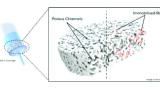
Current methods for analysis of tropane alkaloids in food use large bed weight solid phase extraction (SPE) products (>150 mg) [1], which are time consuming and less sustainable due to large solvent usage. This study validates the extraction of atropine and scopolamine with a 10 mg polymeric SCX 96 well SPE plate followed by HPLC-MS/MS analysis.
Following validation of the method, a range of herbal teas (chamomile, peppermint and green tea) sold on the UK market were analysed to assess the presence of atropine and scopolamine within the final herbal tea infusions.
Tea infusion, according to ISO 3103:1980 [7]:
2.00 g of tea was added to a stainless-steel tea strainer and placed in a beaker. 150 mL of boiling ultrapure water was poured through the tea strainer into the beaker and steeped for five minutes. The final tea solution was allowed to cool to room temperature and then filtered through a 0.22 µm PES filter.
SPE Method:
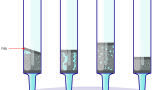
A 10 mg 96 well plate (Microlute CP 10 mg SCX) with a positive pressure manifold (UltraPPM Lite) was used for processing samples. Tea infusion samples were pH adjusted with formic acid to a concentration of 0.1% (v/v) to prepare them for loading onto the SPE plate.
• Conditioning: 1 mL of methanol
• Equilibration: 1 mL of 0.1% formic acid in ultrapure water
• Loading: 1 mL of acidified tea infusion sample (0.1% formic acid)
• Wash 1: 1 mL of 0.1% formic acid in ultrapure water
• Wash 2: 1 mL of 0.1% formic acid in methanol
• Drying step: Dried at 20 PSI for 2 minutes with the positive pressure manifold
• Elution: 2 x 500 µL of 0.5% ammonia in methanol (dried at 20 PSI for 2 minutes after each elution with the positive pressure manifold)
• Reconstitution: Eluate evaporated using a nitrogen blowdown evaporator (Ultravap Mistral) at 30°C and reconstituted with 200 µL of 0.1% formic acid in ultrapure water
HPLC-MS/MS Method:
Table 1: The HPLC and Mass Spectrometer conditions used for analysis and the atropine and scopolamine MRM transitions.
Validation guidelines:
Testing followed pesticide validation guidelines for food - SANTE/11312/2021 [8] and the Limit of Quantification (LOQ) was set by Regulation 2023/2783 [9]:
• Recovery: 70-120% at three concentrations (0.2, 1.0 and 5.0 ng/mL)
• Repeatability: ≤20% at each level
• Linearity: R2 ≥0.99 with residuals ≤±20%
• LOQ: <0.05 ng/mL
Method validation for SPE followed by HPLC-MS/MS
Table 2 shows the linearity, LOQ and matrix effect (ME) for atropine and scopolamine for each of the herbal infusions validated.
Table 2: Linearity, LOQ and matrix effects for chamomile, peppermint and green tea infusions, following SPE and HPLC-MS/MS analysis.
Each herbal infusion matrix-matched calibration showed good linearity from 0.5 to 50 ng/mL, with R2 values between 0.991 - 0.996. Additionally, all calibration levels had residuals of <±20%, which indicated that the method met the specification for linearity.
LOQ values for each herbal infusion were below the LOQ specification of 0.05 ng/mL. Chamomile and peppermint teas both had an LOQ of 0.010 ng/mL for atropine and scopolamine. Green tea had a slightly higher LOQ concentration of 0.025 ng/mL, due to the nosier baseline around the two analytes, which caused a lower signal to noise level.
Matrix effect was evaluated for all three herbal infusions. All samples showed a negative matrix effect (ion suppression), with atropine having a lower matrix effect than scopolamine. SANTE/11312/2021 guidelines state that in the case of >±20% matrix effect, this would need to be addressed in calibration. Hence for recovery and repeatability testing, matrix-matched standards were used to calibrate for both atropine and scopolamine.
Figure 2: Chromatogram showing the LOQ of atropine and scopolamine at 0.010 ng/mL (n=8). Retention time is 1.85 min for scopolamine and 3.43 min for atropine. The resolution between atropine and the peak at 3.20 minutes is 5.0.
Table 3: Recovery and repeatability data for chamomile, peppermint and green tea infusions using the combined SPE and HPLC-MS/MS method for the analysis of atropine and scopolamine. Intra-day repeatability (n=8, in one day) and inter-day repeatability (n=16, on two days) SD = standard deviation.
The recovery and repeatability results showed good recovery for each herbal infusion at every concentration tested, ranging from 78 – 99% for both atropine and scopolamine. The intra-day repeatability showed excellent results, ranging from 0.7 - 3.4 %RSD for atropine and 1.3 - 3.6 %RSD for scopolamine. Inter-day repeatability had a higher %RSD value, ranging from 2.2 - 15.8 %RSD for atropine and 2.1 - 10.8 %RSD for scopolamine which was within specification. This was expected to be higher due to additional variance when testing on different days. This demonstrated that all herbal infusions met specification for recovery and reproducibility.
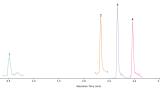
Figure 3: Overlaid chromatograms (n=8) showing the intra-day repeatability data for atropine and scopolamine in peppermint infusion at 0.2 ng/mL. Retention time is 1.85 min for scopolamine and 3.43 min for atropine.
Table 4: Concentration values (± standard deviation, n=4) for atropine, scopolamine and sum of both analytes in herbal infusions prepared using the SPE and HPLC-MS/MS method. ND = Not detected, due to signal to noise being less than 3:1.
The validated SPE and HPLC-MS/MS method was applied to twelve herbal infusions of chamomile, peppermint and green teas, with each infusion prepared in quadruplicate. Most samples contained low or undetectable levels of atropine and scopolamine. However, one chamomile sample (chamomile-5) significantly exceeded EU regulatory limits for atropine at 0.59 ng/mL (~3 x EU limit of 0.2 ng/mL), scopolamine detected at 0.35 ng/mL (exceeds the EU limit), with a sum of atropine and scopolamine concentrations of 0.94 ng/mL (~5 x EU limit).
Figure 4: Overlaid chromatograms showing the 0.2 ng/mL EU limit reference standard versus chamomile-5’s chromatograms (n=4) at a mean concentration of 0.35 ng/mL for scopolamine and 0.59 ng/mL for atropine. Retention time is 1.85 min for scopolamine and 3.43 min for atropine.
This work validated a 96-well format SCX solid phase extraction method using a smaller bed weight (10 mg) for the analysis of atropine and scopolamine in three commonly consumed herbal infusions – chamomile, peppermint and green tea. The method met SANTE/11312/2021 validation guidelines with the method showing good linearity, low limits of quantification and high recovery with good repeatability (intra- and inter-day) across three concentrations (0.2, 1.0 and 5.0 ng/mL). The application of the method to commercially available teas confirmed that most infusions contained low or undetectable levels of atropine and scopolamine. However, one chamomile sample exceeded the regulatory limits for both atropine and scopolamine by almost five times. These results show that a low bed weight SPE method is suitable for the analysis of herbal tea samples and can offer a more sustainable alternative to higher bed weight SPE methods.
1: L. González-Gómez, S. Morante-Zarcero, D. Pérez-Quintanilla, I. Sierra, Occurrence and Chemistry of Tropane Alkaloids in Foods, with a Focus on Sample Analysis Methods: A Review on Recent Trends and Technological Advances, Foods, 2022, 11, 407, DOI: 10.3390/foods11030407.
2: P. P. J. Mulder, M. Nijs, M. Castellari, M. Hortos, S. MacDonald, C. Crews, J. Hajslova, M. Stranska, Occurrence of tropane alkaloids in food, EFSA Supporting Publications, 13, DOI: 10.2903/sp.efsa.2016.EN-1140.
3: M. Nijs, C. Crews, F. Dorgelo, S. MacDonald, P. P. J. Mulder, Emerging Issues on Tropane Alkaloid Contamination of Food in Europe, Toxins, 2023, 15, 98, DOI: 10.3390/toxins15020098
4: L. González-Gómez, S. Morante-Zarcero, J. A. M. Pereira, J. S. Câmara, I. Sierra, Improved Analytical Approach for Determination of Tropane Alkaloids in Leafy Vegetables Based on µ-QuEChERS Combined with HPLC-MS/MS, Toxins (Basel), 2022, 14, 650, DOI: 10.3390/toxins14100650.
5: Health for humans, animals & plants – Tropane Alkaloids, https://www.ages.at/en/human/nutrition-food/residues-contaminants-from-a-to-z/tropane-alkaloids, (accessed May 2025).
6: Commission Regulation (EU) 2023/915 of 25 April 2023 on maximum levels for certain contaminants in food and repealing Regulation (EC) No 1881/2006, https://eur-lex.europa.eu/legal-content/EN/TXT/?uri=CELEX%3A02023R0915-20250101, (Accessed May 2025)
7: ISO 3103: Tea — Preparation of liquor for use in sensory tests, 1980 edition.
8: Analytical Quality Control And Method Validation Procedures For Pesticide Residues Analysis in Food and Feed - Sante 11312/2021 V2, https://food.ec.europa.eu/system/files/2023-11/pesticides_mrl_guidelines_wrkdoc_2021-11312.pdf, (accessed April 2025).
9: Commission Implementing Regulation (EU) 2023/2783 of 14 December 2023 laying down the methods of sampling and analysis for the control of the levels of plant toxins in food and repealing Regulation (EU) 2015/705, https://eur-lex.europa.eu/eli/reg_impl/2023/2783/oj, (accessed April 2025).


.jpg)
-(2).jpg)