Laboratory products
Users in Drug Discovery and life science laboratories, occasionally report uneven and very long drying times in polypropylene microplates when dried in centrifugal vacuum evaporators. This could be due to reasons such as a faulty unit, user error or microplate contamination. This paper describes a series of tests done to identify how microplate contamination can affect the boiling point of samples thereby affecting their drying times.
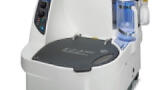
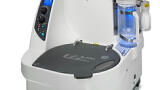
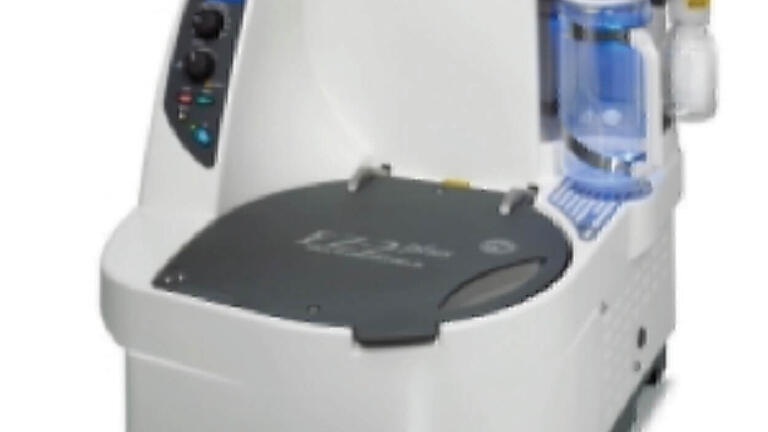
To investigate this phenomenon, a number of experiments were done using commercially available 24 well microplates, from two manufacturers M1 and M2. In each experiment, a series of microplates were drawn from a batch to ensure a comprehensive sample representation. Each well was filled with 6ml of pure water and dried using heat transfer plates, where applicable, at 8mbar using a Genevac EZ-2 centrifugal evaporator (Figure 1). Thermocouple probes were placed into several wells across the plate to monitor the boiling point of the water. It is expected that water should boil at 4°C at 8mbar if it is contamination free.
Figure 1: EZ-2 centrifugal evaporator
Microplates from manufacturer M2 (see Figure 2), dried as expected and showed no adverse effects. In this experiment the boiling temperature of water held at about 4°C at 8mbar until the all the water was completely evaporated.
Figure 2
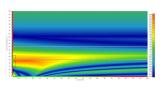
However, in similar experimental conditions, microplates from manufacturer M1 did not dry as expected. Figure 3 below illustrates the volume of water left in each well at the end of the run and Figure 4, shows the graph of the boiling temperature vs pressure curve against time.
Figure 3
Figure 4
The uneven drying of the manufacturer microplate M1, might be explained by contaminant film formation on the surface of the water hindering evaporation. Figure 4 shows fluctuation of the sample temperature at 8mbar. The uneven results indicate that the sample being evaporated was not pure water and that film formation arising from microplate M1 hindered the water evaporation resulting in an elevated sample temperature.
To investigate this contaminant film formation phenomena further, we took new microplates from manufacturer M1, and washed them in acetone before use. Water was added to these ‘cleaned’ plates and same evaporative experimental procedure repeated. The results (not shown) were almost identical to those obtained when using the contaminant-free M2 microplates.
In further experiments to simulate the effect of contamination, we added a small amount of an inert mineral oil to some wells of a microplate from manufacturer M2 along with 6ml of water. Results from this evaporation experiment are shown in Figure 5 below.
It is clear from a comparison of Figure 5 (induced contamination) with those of Figure 4 (genuine contamination) that the effects are similar. The induced contamination gave results closely following those of the contaminated, unwashed plates i.e. they exhibiting elevated solvent temperatures during drying, and left some microplate wells wet. The induced contamination is clearly more severe than that which occurs when using the contaminated microplates from Manufacturer M1. This is likely because the naturally occurring contaminants were present at lower levels that the gross induced contamination.
From these experiments we can conclude that microplates from manufacturer M1 were contaminated with a material that forms a film on the water sample surface and acts like a cap to the well, preventing or inhibiting evaporation. This film formation phenomena caused by contamination explains why some microplates exhibit uneven and abnormally long evaporation times.
Our study was not to identify the nature of the contaminant. From a review of information concerning microplate production processes, the contaminant is likely to be a plasticiser, mould release agent or an anti-static agent.
In summary, if such an effect manifests itself, to prevent contamination and long sample drying times, it may be advisable to do some preliminary runs using known pure solvents. If observed drying times are much longer than expected, try washing plates before use. Acetone washing is not always effective, but has proved useful in many cases. Where washing cures long drying times, plate contamination is almost certainly the cause, and another plate source should be used.
The Author: Induka Abeysena. Portfolio Manager
Further information:
Please contact Induka Abeysena at Genevac Ltd at salesinfo@genevac.co.uk


.jpg)
-(2).jpg)