-
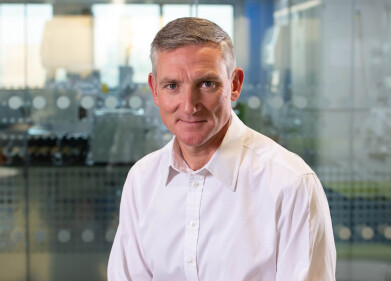
 Anders Rosengren
News
Researchers use personalised risk profiles for diabetic test
Oct 16 2014
A potential treatment for type 2 diabetes which targets the disease mechanism itself rather than just the symptoms has been tested on trial volunteers by researchers at Lund University, Sweden, using knowledge about the individual patient’s genetic risk profile.
“The concept of treatment personalised to the individual’s risk profile has great potential. Our results show that it is possible to block the effects of a common risk gene for type 2 diabetes,” said Anders Rosengren, the diabetes researcher at Lund University in charge of the project.
Former research at Lund (Science, 2009) indicated that a common gene variant in the population makes insulin-producing cells sensitive to stress hormones, impairing the cells’ capacity to secrete insulin. Continued work showed that Yohimbin, a drug that had been deregistered for several years, effectively blocked the gene variant’s damaging effects both in animal experiments and in experiments with donated human insulin-producing cells. When Yohimbin was administered, the capacity to secrete insulin improved.
“The fact that this was an old drug made this journey a lot faster. The substance had already been tested for safety and approved,” observed Erik Renström, another of the researchers behind the recently published article.
In the test report around 50% of the sample population had the gene variant and insulin response to a glucose tolerance test was 25% worse compared to the group who did not have the risk variant. Subsequently, participants in the study were given either Yohimbin or a placebo on three different occasions and insulin secretion was registered again.
“Yohimbin neutralised the effects of the risk gene. The carriers of the risk gene gained the same capacity to secrete insulin as those without the risk variant”, observes Yunzhao Tang, principal author of the recently published article.
“Yohimbin must be modified to minimise side-effects, in this case raised blood pressure, and we need the help of a cooperation partner to achieve this. The substance must also be tested on more patients before it can become a clinical drug,” said Anders Rosengren, adding, “purely theoretically, the drug should be effective for the 40 per cent of type 2 diabetes sufferers who are carriers of the genetic risk variant.”


Digital Edition
Lab Asia Dec 2025
December 2025
Chromatography Articles- Cutting-edge sample preparation tools help laboratories to stay ahead of the curveMass Spectrometry & Spectroscopy Articles- Unlocking the complexity of metabolomics: Pushi...
View all digital editions









Events
Jan 21 2026 Tokyo, Japan
Jan 28 2026 Tokyo, Japan
Jan 29 2026 New Delhi, India
Feb 07 2026 Boston, MA, USA
Asia Pharma Expo/Asia Lab Expo
Feb 12 2026 Dhaka, Bangladesh




