Mass spectrometry & spectroscopy
Portable Spectroradiometers Helps to Develop Better Disease Management and Yield Production in Wheat Crops
Aug 09 2016
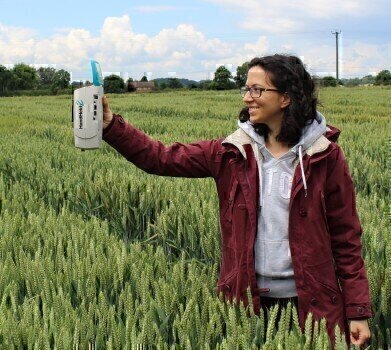
Analytik report on the use of the ASD FieldSpec Handheld 2 portable spectroradiometers to help in the management of disease and yield prediction in wheat crops.
Being able to identify the early characteristics of disease during crop development is the subject of a three and a half year study of test field sites in Nottinghamshire, Cambridgeshire and South Wales. Co-funded by Innovate UK and BBSRC, a consortium comprising Agrii, RAGT and the University of Nottingham are running a project into this important challenge.
The ASD FieldSpec4 portable spectroradiometer from Analytik was chosen by the team to make on-site spectral reflectance measurements on wheat crops at each of the field sites. The reflectance data will be correlated with hyperspectral image data to aid final analysis. The ASD instruments were attractive due to their rugged and robust construction backed with no compromise in reliable spectrographic performance. Dr Rumiana Ray is an Associate Professor in Crop Pathology at the School of Biosciences at the University of Nottingham. “We aim to identify novel hyperspectral and/or fluorescence signatures to probe crop health. If we are able to also differentiate responses in our varieties to disease and treatment then we can improve crop management decisions” said Dr Ray.
Leading the project on the ground is Agrii Head of R&D, David Langton: “Thoroughly integrated management, employing an extended armoury of agronomic tools alongside the best available chemistry and varietal resistance has become every bit as essential in cost-effective wheat Septoria control as it is in tackling the scourge of black-grass. Just like black-grass, wheat growers can no longer afford to rely solely on chemical crop protection to counter the country's biggest cereal disease threat.”
The project sets out to explore and develop a number of innovative approaches to improving fungicide choice and spray timing decision-making at the three sites. Now in its second year, different wheat varieties are being tested biweekly. It is still early to define precise rules to maximise yield. The goal is to develop a diagnostic tool for the disease to aid decision making. This means a library of spectra is being collected. It is also important to get a good yield prediction as early as possible because that will influence the choice and application rate of fungicides to be used as well as total rate of nitrogen to apply.
Digital Edition
Lab Asia Dec 2025
December 2025
Chromatography Articles- Cutting-edge sample preparation tools help laboratories to stay ahead of the curveMass Spectrometry & Spectroscopy Articles- Unlocking the complexity of metabolomics: Pushi...
View all digital editions










Events
Jan 21 2026 Tokyo, Japan
Jan 28 2026 Tokyo, Japan
Jan 29 2026 New Delhi, India
Feb 07 2026 Boston, MA, USA
Asia Pharma Expo/Asia Lab Expo
Feb 12 2026 Dhaka, Bangladesh




