Mass spectrometry & spectroscopy
A New Generation of Plasma Performance in ICP-OES
Jun 10 2015
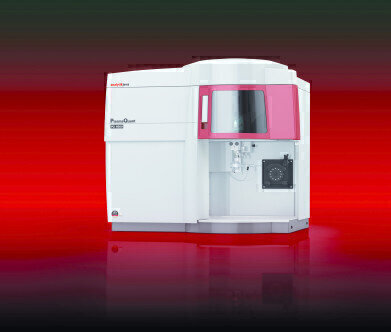
In today’s products and materials ultra-trace amounts of additives and impurities often have great influence on performance and grade. Rapid and reliable trace detection in ever more complex and concentrated analytical samples has thus become the key objective of many laboratories entrusted with product control and quality assurance. Since its introduction the stability of the inductively coupled plasma (ICP) has presented a major limitation for ICP optical emission spectrometry (OES), as the detection power is hugely affected by the ability of the plasma to tolerate high sample loadings such as of brine or naphtha. Here, effective detection limits will be best when excellent signal stability is achieved with minimal dilution as sample dilution limits the realm of possibilities in ultra-trace analysis. With the introduction of the High-Resolution Array ICP-OES PlasmaQuant ® PQ 9000, Analytik Jena brings a new generation of free-running high-frequency generators to the ICP-OES market that offer unmatched plasma performance for the continuous introduction of the highest matrix loadings with line intensity deviations smaller than 5% and RSD-values about 1% over an average working day.
Digital Edition
Lab Asia Dec 2025
December 2025
Chromatography Articles- Cutting-edge sample preparation tools help laboratories to stay ahead of the curveMass Spectrometry & Spectroscopy Articles- Unlocking the complexity of metabolomics: Pushi...
View all digital editions










Events
Jan 21 2026 Tokyo, Japan
Jan 28 2026 Tokyo, Japan
Jan 29 2026 New Delhi, India
Feb 07 2026 Boston, MA, USA
Asia Pharma Expo/Asia Lab Expo
Feb 12 2026 Dhaka, Bangladesh




