
Laboratory products
Protein Analysis in Food
Apr 01 2025
Proteins are essential macromolecules composed of carbon, hydrogen, oxygen, nitrogen, and sulfur, playing a key role in nutrition, metabolism, and food quality. Nitrogen, their most distinctive element, accounts for 13.4% to 19.1%. Protein quantification is crucial in the food industry, nutrition research, and quality control but is challenging due to the presence of both protein-bound and non-protein nitrogen (NPN). To ensure accuracy, laboratories use standardized methods that measure total nitrogen and distinguish between these fractions. The most widely used techniques are the Kjeldahl and Dumas methods, each offering unique advantages based on application needs.
Kjeldahl Method: The Gold Standard for Protein Analysis
Developed in 1883, the Kjeldahl method is one of the most widely accepted techniques for determining nitrogen and protein content in food. It is particularly valuable in regulatory compliance, food labeling, and quality control, as it measures Total Kjeldahl Nitrogen (TKN) - the sum of organic nitrogen and ammonium nitrogen in a sample.
The Kjeldahl method is recognized as the official standard by AOAC, ISO, FDA, and other regulatory bodies due to its high accuracy and reproducibility. It is highly versatile and applicable to various food samples, however, it has method has some limitations, as it is time-consuming and labor-intensive compared to alternative techniques. It also requires hazardous chemicals. Additionally, it has limitations in detecting certain nitrogen compounds, as Total Kjeldahl Nitrogen (TKN) only includes organic nitrogen and ammonia, potentially underestimating the total nitrogen content by not fully measuring nitrites and nitrates.
Dumas Method: Fast and Automated Protein Determination
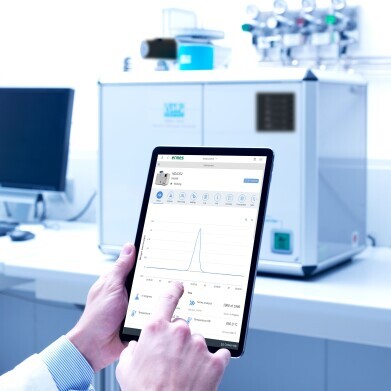
The Dumas method, also known as combustion analysis, is a rapid, fully automated technique for determining the total nitrogen and protein content in food samples. Unlike the Kjeldahl method, which relies on wet chemicals, the Dumas method is based on high-temperature combustion and gas analysis.
This technique has gained popularity due to its speed, automation, and elimination of hazardous chemicals, making it particularly suitable for high-throughput laboratories and industrial applications. While the Dumas method provides a reliable alternative to Kjeldahl, its applicability depends on regulatory acceptance and the specific requirements of the food matrix being analyzed.
Although it involves a higher initial investment, it compensates with lower costs per analysis due to automation, reduced chemical usage, and minimal manual handling. However, it is less suitable for heterogeneous or non-homogeneous food matrices, such as samples with large particles, uneven ingredient distribution, or high moisture content.
Choosing the Best Method for Protein Analysis in Food
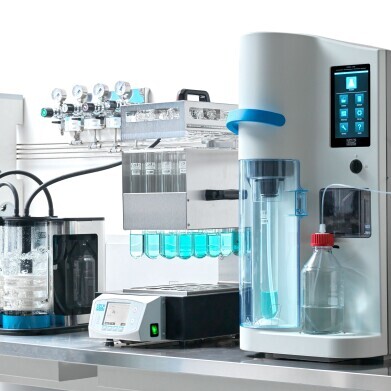
VELP provides comprehensive solutions for both Kjeldahl and Dumas analysis, ensuring accuracy, efficiency, and compliance with international standards. For Kjeldahl analysis, VELP offers a complete range of instruments, including digestion and distillation units, which come with different levels of automation to meet the diverse needs of laboratories. For Dumas analysis, VELP provides the NDA 702, featuring fully automated, high-throughput combustion analyzer for rapid and chemical-free nitrogen determination.
Contact our experts to select the best approach for your analytical needs!


Digital Edition
Lab Asia Dec 2025
December 2025
Chromatography Articles- Cutting-edge sample preparation tools help laboratories to stay ahead of the curveMass Spectrometry & Spectroscopy Articles- Unlocking the complexity of metabolomics: Pushi...
View all digital editions








Events
Jan 21 2026 Tokyo, Japan
Jan 28 2026 Tokyo, Japan
Jan 29 2026 New Delhi, India
Feb 07 2026 Boston, MA, USA
Asia Pharma Expo/Asia Lab Expo
Feb 12 2026 Dhaka, Bangladesh




