Laboratory products
Increasing the Number of Pesticides Detectable in a Single Injection
Mar 18 2011
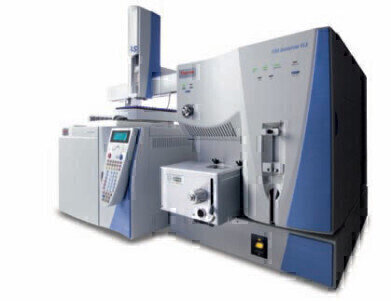
Thermo Fisher Scientific, Inc announced it has developed a faster screening method for pesticides, enabling labs to simultaneously screen and confirm the presence of more than 1000 pesticides, at low levels, using a single injection. Other commonly used techniques require multiple injections in order to comply with increasingly stringent regulations. The new method, which uses the Thermo Scientific Quantum GC, can acquire 3,000 timed selective reaction monitoring (SRM) transitions per run, increasing sample throughput while ensuring accuracy in a matrix. The method is detailed in an application note entitled ‘Rapid Analysis of 303 Pesticide Residues in Green Bean Using Triple Quadrupole GC-MS/MS’.
Pesticides used to prevent, destroy and control pests on food crops often leave residues on agricultural products that pose risks to consumers. Effects range from short-term health problems such as headaches and dizziness to long-term damage to the nervous system and, in some cases, cancer.
Gas chromatography (GC) with element-selective detectors and single quadrupole gas chromatography/mass spectrometry (GC/MS) are techniques commonly used for GC-amenable pesticide residue analysis in laboratories. As the use of pesticides increases and maximum residue levels (MRLs) set by regulations become more stringent, labs are requiring alternatives to existing techniques that require one sample be analysed using several injections and multiple methods. The new Thermo Fisher Scientific GC-MS/MS method enables the rapid screening and confirmation of more than 1000 pesticides in just one injection, increasing productivity and, by delivering results faster, safeguarding human health. The method is designed to facilitate compliance with the European Council Directive 96/23/EC, which requires at least two SRM transitions per compound.
In this method, scientists analysed 303 pesticides in green beans in a single run using the TSQ Quantum GC™ under timed-SRM mode. The timed-SRM function enabled the acquisition of a total of 652 transitions. The dwell time of each transition was automatically maximised for each compound to give the best sensitivity for all pesticides. Using this method, linearity and recoveries are achieved within industry requirements and sensitivity can easily reach 0.0040 mg/kg for all pesticides in green beans. The new method demonstrates that timed-SRM mode is an extremely effective method for screening and determining large amounts of pesticides at low levels in the sample matrix.


Digital Edition
Lab Asia Dec 2025
December 2025
Chromatography Articles- Cutting-edge sample preparation tools help laboratories to stay ahead of the curveMass Spectrometry & Spectroscopy Articles- Unlocking the complexity of metabolomics: Pushi...
View all digital editions







Events
Jan 21 2026 Tokyo, Japan
Jan 28 2026 Tokyo, Japan
Jan 29 2026 New Delhi, India
Feb 07 2026 Boston, MA, USA
Asia Pharma Expo/Asia Lab Expo
Feb 12 2026 Dhaka, Bangladesh