
Laboratory products
Water determination in aldehydes and ketones using Karl Fischer titration
Oct 04 2017
Aldehydes and ketones are both widely used in a variety of industrial processes. For example, aldehydes have a range of applications from plastics manufacturing through to the formulation of detergents and perfumes. Ketones, meanwhile, are used in the production of cosmetics, engineering polymers and pharmaceuticals, amongst other products.
What both these organic compounds have in common is that they pose problems for Karl Fischer titration because they form acetals and ketals respectively in the presence of conventional reagents. These reactions create water, which is also titrated, resulting in vanishing endpoints and erroneously high water content calculations. With aldehydes a second side reaction, the bisulfite addition, can also occur. This consumes water and leads to false low moisture content measurements.
Aldehydes are much more reactive than ketones and their tendency to undergo the bisulfite addition is particularly strong. The reactivity of aliphatic ketones decreases with increasing chain length whereas aromatic ketones are altogether less inclined to react in the presence of reagents. Because of these issues, Honeywell laboratory investigated the behaviour of both aldehydes and ketones during Karl Fischer titration in order to determine how to ensure issue-free, timely and accurate water determination.
The formation of acetals and ketals can be suppressed by replacing methanol in the titrating agent with another solvent, typically pyridine and 2-methoxyethanol (methylglycol). However, Honeywell laboratory found that both solvents were unsatisfactory. Pure pyridine alters the stoichiometry of the Karl Fischer reaction and increases the bisulfite addition. The use of 2-methoxyethanol, on the other hand, does not sufficiently inhibit the formation of acetals and ketals and results in a slow titration rate. Here the levels of water are too high and, because only small samples can be analysed, the accuracy of the titration is impaired.
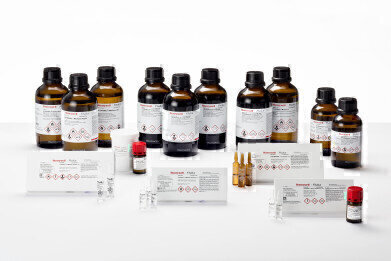
Honeywell’s research did, however, identify solvents that permit the determination of water in aldehydes and ketones without adverse side reactions. These solvents form the basis of the Hydranal K-type reagents. This product line comprises Hydranal-Composite 5 K and Hydranal-Medium K for the volumetric determination of water, while Hydranal-Coulomat AK and Hydranal-Coulomat CG-K are suitable for coulometric determination. The product line also includes Hydranal-KetoSolver and Hydranal-Working Medium K, however Hydranal-Medium K is recommended as the first choice as is less toxic than others.
By using these reagents and following the recommended titration procedures, the side reactions of acetal and ketal formation and the bisulfite addition are significantly suppressed. As a result, the titration of aldehydes and ketones can be achieved unimpeded.
The commitment to accurate results is also backed up by the specialist team of industry professionals at the Hydranal Center of Excellence, which can answer technical questions from customers and can even help them with method development. The Hydranal Center of Excellence is accredited to both ISO/IEC 17025 and ISO Guide 34, which together are the highest achievable level of quality assurance.
Download the lab report to discover more about water determination in aldehydes and ketones using Karl Fischer titration.

Digital Edition
Lab Asia Dec 2025
December 2025
Chromatography Articles- Cutting-edge sample preparation tools help laboratories to stay ahead of the curveMass Spectrometry & Spectroscopy Articles- Unlocking the complexity of metabolomics: Pushi...
View all digital editions










Events
Jan 21 2026 Tokyo, Japan
Jan 28 2026 Tokyo, Japan
Jan 29 2026 New Delhi, India
Feb 07 2026 Boston, MA, USA
Asia Pharma Expo/Asia Lab Expo
Feb 12 2026 Dhaka, Bangladesh




