

Laboratory products
Combining Freeze Drying and High Pressure Homogenisation for Ultra-Fine Nanocrystal Production
Feb 15 2021
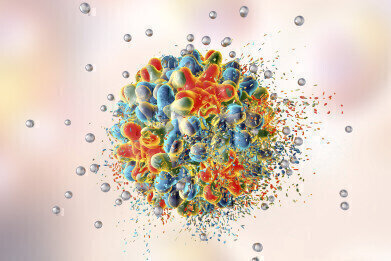
In recent years, nanomedicine has proven to be key in overcoming many of the challenges associated with poorly water-soluble drugs. Decreasing the size of drug particles can increase bioavailability and solubility, as a result of the increased API surface area.
Due to increased bioavailability, a lower amount of API is required, which in turn leads to a more cost-efficient product, with less risks and side effects for the patient [1].
High pressure homogenisation has long been the favoured method of particle size reduction and is often considered as a first-generation approach. Recently, second-generation approaches have been introduced and these involve a combination of technologies (SmartCrystal processes). One of which is known as the H96 process -the combination of freeze drying, followed by high pressure homogenisation.
The aim is to modify the starting material in such a way, that it can be better broken down by high pressure homogenisation [1].
Benefits of combinative technology include: faster production of the nanocrystal, by reducing the number of required homogenisation cycles/passes; higher physical stability; smaller achievable particle size; improved in vivo performance.
The H96 process involves initial freeze drying of an organic solution of the poorly water-soluble drug.
Another benefit of the H96 approach is a reduction in the required number of homogenisation cycles/passes to achieve the desired particle size and/or size distribution.
At pilot and production scale, this could bring about significant cost-savings, as a result of reduced processing and labour time, reduced wear rates and machine downtime, all of which improve the overall commercial viability of the process/project.
Biopharma Group supply high pressure homogenisers across the UK & Ireland, as well as the market-leading SP Scientific freeze dryers - all fully supported by their Technical Service Team
Biopharma Group’s experience has been established with more than 3000 projects developed for APIs, biopharmaceuticals, therapeutic delivery systems, PCR reagents, whole organisms, vaccines, blood components, food and nutraceuticals ensuring success in many industrial processes, globally.
More information online
Reference:
1. Dahiya, S. (2017). DRUG NANONIZATION: AN OVERVIEW OF INDUSTRIALLY FEASIBLE TOP-DOWN TECHNOLOGIES FOR NANOCRYSTAL PRODUCTION. Bulletin of Pharmaceutical Research. (2), 144.

Digital Edition
Lab Asia Dec 2025
December 2025
Chromatography Articles- Cutting-edge sample preparation tools help laboratories to stay ahead of the curveMass Spectrometry & Spectroscopy Articles- Unlocking the complexity of metabolomics: Pushi...
View all digital editions










Events
Jan 21 2026 Tokyo, Japan
Jan 28 2026 Tokyo, Japan
Jan 29 2026 New Delhi, India
Feb 07 2026 Boston, MA, USA
Asia Pharma Expo/Asia Lab Expo
Feb 12 2026 Dhaka, Bangladesh




