-
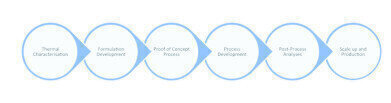 Biopharma Group’s systematic approach in freeze drying.
Laboratory products
A Systematic Approach to Freeze Drying Food
Aug 07 2019
Water is generally the main ‘ingredient’ in food and has a considerable impact on both physico-chemical and mechanical properties, which constantly change during storage. The product shelf life is limited by biological activity of microorganisms and water deeply affects it. Bacteria and moulds easily grow and proliferate in humid conditions, resulting in quicker spoilage and organoleptic degradation. However, not all water present in food has the same influence on the growth of microorganisms. In fact, interaction of water with the material structure can be different: part of it strongly interacts with the material matrix in a dynamic equilibrium, while the remaining, which is the majority, becomes more available for physical, chemical and microbiological reactions.
In order to reduce the water content and activity, drying is carried out. This process will have an impact on the final food attributes and quality and, therefore, it should be performed rationally.
Biopharma has recently expanded their facilities to allow for food freeze drying, introducing services built on a quality by design (QbD) approach that aims to assist in achieving the customer requirements in terms of shelf life, appearance and physico-chemical properties. An initial characterisation of the thermal behaviour of the pre-lyophilised product is essential in order to design a tailored drying cycle and make the product more suitable for the process. Without it, the risk is to use a freeze drying process that dries the product, but not in a safe and efficient way, affecting irreversibly the quality. Technologies such as freeze drying microscopy (Lyostat), electrical impedance analysis (Lyotherm) and differential scanning calorimetry (DSC) are typically used to fully understand the food thermal behaviour.
Knowing the thermal stability of the product allows to prevent deleterious events such as boiling and ‘puffing’, shrinkage and collapse, clump formation, increased density, slowed sublimation kinetics, slowed rehydration, colour change and nutrient loss. After this thermal characterisation, food can be reformulated or treated with hypertonic solutions to improve the final appearance after drying as well as the mechanical and chemical properties. Finally, after the proof of concept and/or the process optimisation, the dried material is evaluated with post-process analyses.
More information online: www.biopharma.co.uk


Digital Edition
Lab Asia Dec 2025
December 2025
Chromatography Articles- Cutting-edge sample preparation tools help laboratories to stay ahead of the curveMass Spectrometry & Spectroscopy Articles- Unlocking the complexity of metabolomics: Pushi...
View all digital editions










Events
Jan 21 2026 Tokyo, Japan
Jan 28 2026 Tokyo, Japan
Jan 29 2026 New Delhi, India
Feb 07 2026 Boston, MA, USA
Asia Pharma Expo/Asia Lab Expo
Feb 12 2026 Dhaka, Bangladesh




