Chromatography
FFF-MALS Provides Efficient Liposome Characterisation
Nov 14 2011
Wyatt Technology Corporation announces that its field flow fractionation (FFF) technology combined with multi-angle light scattering (MALS) and quasi-elastic light scattering (QELS) enables rapid measurements of particle size, size distribution, particle count, as well as structure. The combined system performs the most difficult sizing tasks in key areas of research and development in molecular biology and nanotechnology analyses, including the separation and characterisation of liposomes and nanoparticles.
Liposomes are made of lipid bilayers. The size of a liposome ranges from some 20nm up to several micrometers and may be composed of one or several concentric membranes. Liposomes possess unique properties owing to the amphiphilic character of the lipids, which make them suitable for drug delivery. Liposomes have attracted considerable attention as potential vehicles for drug delivery to selected cells or tissues in vivo. Therefore, it is of great importance to monitor liposome size and encapsulation during liposome research, formulation, manufacturing and quality control. However, conventional methods to characterise liposomes fail to perform efficiently and to cover the whole
size of liposomes.
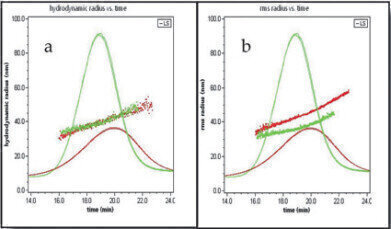
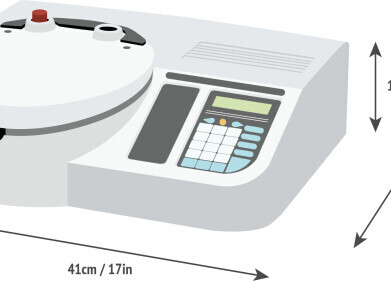
In this new application note, a method combining the Wyatt Technology Eclipse FFF system with a DAWN HELEOS and online QELS was used to analyse two liposome samples, one empty, and one filled. The results demonstrated that the combined method is capable of determining the degrees of encapsulation and the internal structures of the two liposomes without making assumptions. The FFF system offers a number of distinct advantages over column separation techniques for many applications. The method is robust and easy to use, involving minimal shearing and enabling a broad separation range, from small proteins (nm) to large particles (μm). FFF is a non-destructive technique that achieves true particle size distribution and on-line absolute characterisation of a wide range of solutions and dispersions. Combined with MALS detectors, the method can determine the absolute size and molar mass distributions as well as the structure and conformation of the particles.
Digital Edition
Lab Asia Dec 2025
December 2025
Chromatography Articles- Cutting-edge sample preparation tools help laboratories to stay ahead of the curveMass Spectrometry & Spectroscopy Articles- Unlocking the complexity of metabolomics: Pushi...
View all digital editions










Events
Jan 21 2026 Tokyo, Japan
Jan 28 2026 Tokyo, Japan
Jan 29 2026 New Delhi, India
Feb 07 2026 Boston, MA, USA
Asia Pharma Expo/Asia Lab Expo
Feb 12 2026 Dhaka, Bangladesh




